

Greater Tokyo

NAGANO

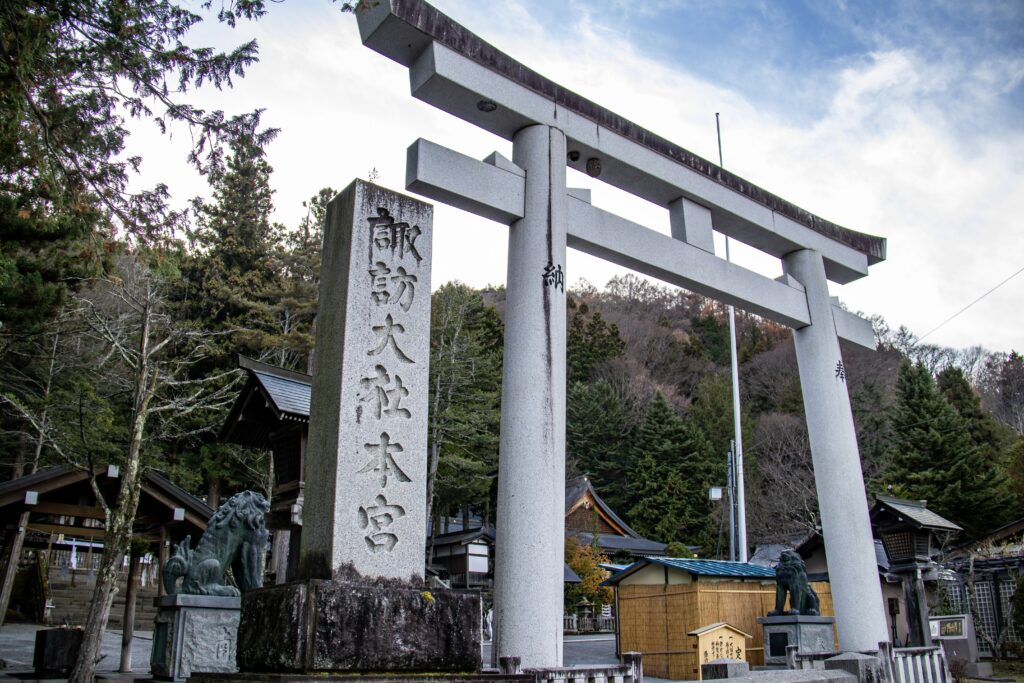
Suwa Taisha Kamisha Honmiya

Walk into one of Japan’s oldest shrine landscapes, where ancient forest and monumental wooden architecture frame a living tradition of faith.

Suwa Taisha, the head shrine overseeing more than 10,000 Suwa shrines across Japan, stands at the foot of Mt. Moriya, where ancient nature worship still lives on.
Culture & Arts Temples & Shrines
A shrine rooted in myth and sacred landscape

A shrine rooted in myth and sacred landscape

The origins of Suwa Taisha trace back to ancient mythology recorded in the Kojiki, Japan’s oldest chronicle of myths and early history compiled in the 8th century. According to these traditions, the region of Suwa has long been regarded as a sacred landscape where mountains, forests, and water were believed to be inhabited by divine presence. The shrine complex consists of four sanctuaries arranged around Lake Suwa: Kamisha Maemiya and Honmiya to the south, and Shimosha Harumiya and Akimiya to the north. At Kamisha Honmiya, the mountain rising behind the shrine is revered as the sacred object of worship itself. This reflects an early form of Shinto in which the natural world is not separate from the divine, but rather understood as its visible expression. Even today, visitors may sense that the shrine’s spiritual focus extends beyond its buildings to the surrounding landscape itself.
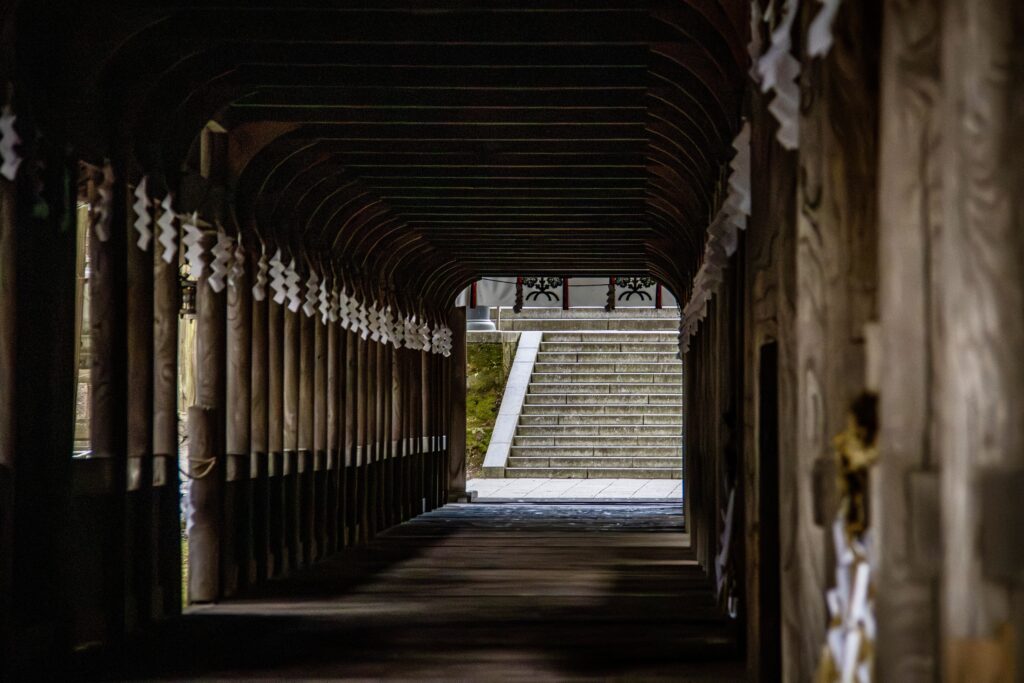
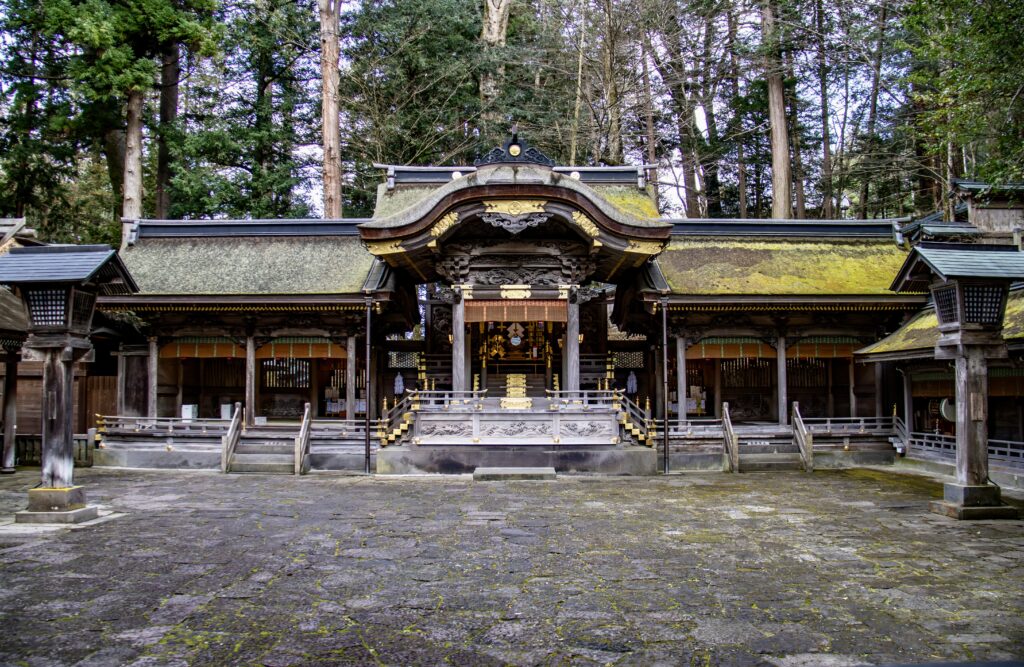
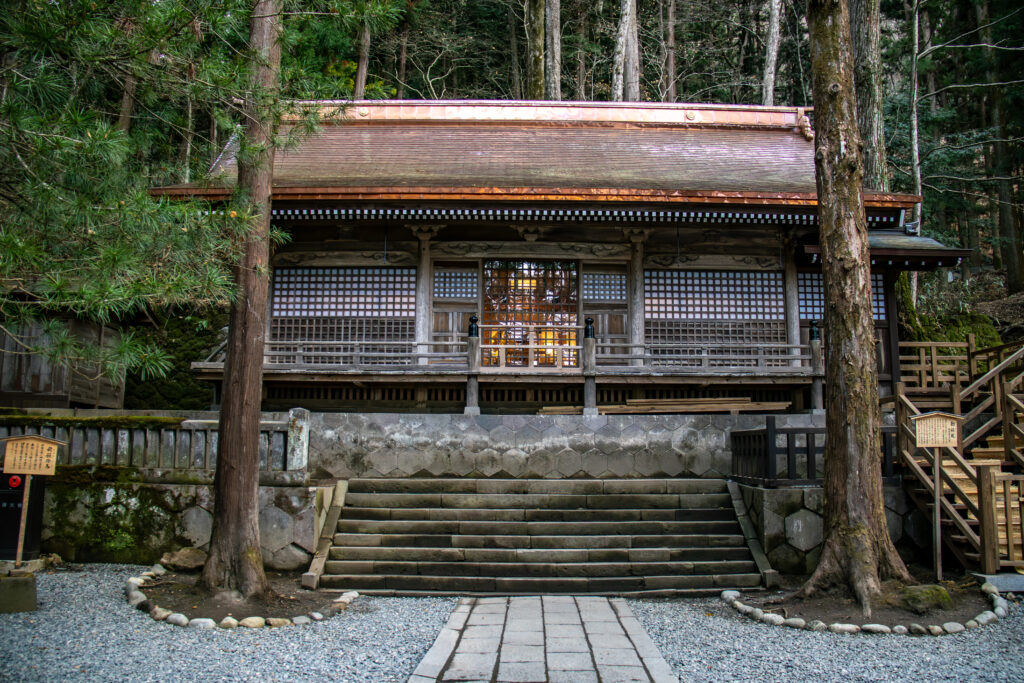
Kamisha Honmiya stands within an immense shrine forest of roughly 33 hectares, where around 500 plant species grow, making it one of the few remaining primeval forests in central Japan. Towering cedar and evergreen trees create a deep green canopy that surrounds the shrine grounds year-round. Within this forest, monumental wooden structures rise quietly among the trees, creating a landscape where architecture and nature feel inseparable. The shrine follows the distinctive architectural style known as Suwa-zukuri, in which worship halls stand before the sacred mountain rather than a conventional main sanctuary building. This arrangement reflects the belief that the mountain itself is the true dwelling place of the deity, with the buildings serving as spaces for ritual and prayer.
Many of the buildings visible today were reconstructed during the Edo period, when the shrine received strong patronage from regional leaders and the Tokugawa shogunate. Kamisha Honmiya preserves more historic structures than any of the other Suwa sanctuaries. Among them is a four-legged gate said to have been donated by Tokugawa Ieyasu, the first shogun of the Tokugawa shogunate that ruled Japan for more than 250 years. Several of the shrine’s structures are now designated Important Cultural Properties of Japan. Standing among the towering Onbashira pillars that mark the shrine grounds, these buildings form a powerful reminder of the centuries of devotion that shaped Suwa Taisha. Together, they express a spiritual landscape where mountain, forest, architecture, and faith remain deeply intertwined.

© Sébastien Raineri

Phone number
+81-266-52-1919
Business hours
9:00 am – 4:00 pm