

Travelling the Koshu Kaido: A Journey Along Japan’s Historic Road
The Koshu Kaido is one of Japan's five great routes from the Edo period, a historic road that stretches approximately 220 kilometers (about 137 miles) from Nihombashi in Edo (modern-day Tokyo) to Kofu, before continuing on to join the Nakasendo route at Shimosuwa in present-day Nagano. Today, this ancient road also feels like a living corridor through Japanese history. Connecting mountain passes, post towns, and landscapes that once inspired ukiyo-e masters such as Katsushika Hokusai, it remains an inspiring path rich in cultural landmarks and memorable sights. Originally developed in the early Edo period as a military route linking Edo Castle with Kofu Castle, the Koshu Kaido served strategic and defensive purposes. Historical records suggest it may have even been envisioned as an emergency evacuation route for the shogun. By the mid-Edo period, however, the road had evolved into a vital commercial artery, transporting silk textiles and agricultural products from Kai Province (modern-day Yamanashi) to Edo. Religious pilgrims heading to Mount Fuji and Mount Minobu added to the flow of travelers, and along the way, 45 post towns developed to support them with lodging, meals, and other services. Much of the original road follows what is now National Route 20, but traces of its storied past are remarkably well-preserved.
Shinjuku Gyoen: Where the Journey Begins
My journey began at Shinjuku Gyoen, a somewhat unexpected starting point in the heart of modern Tokyo. Yet this garden’s connection to the Koshu Kaido runs quite deep. In 1590, Tokugawa Ieyasu granted this extensive estate to Naito Kiyonari, one of his trusted retainers, in recognition of his service guarding the western approaches to Edo Castle. The district became known as Naito-cho, named after the family who administered it.
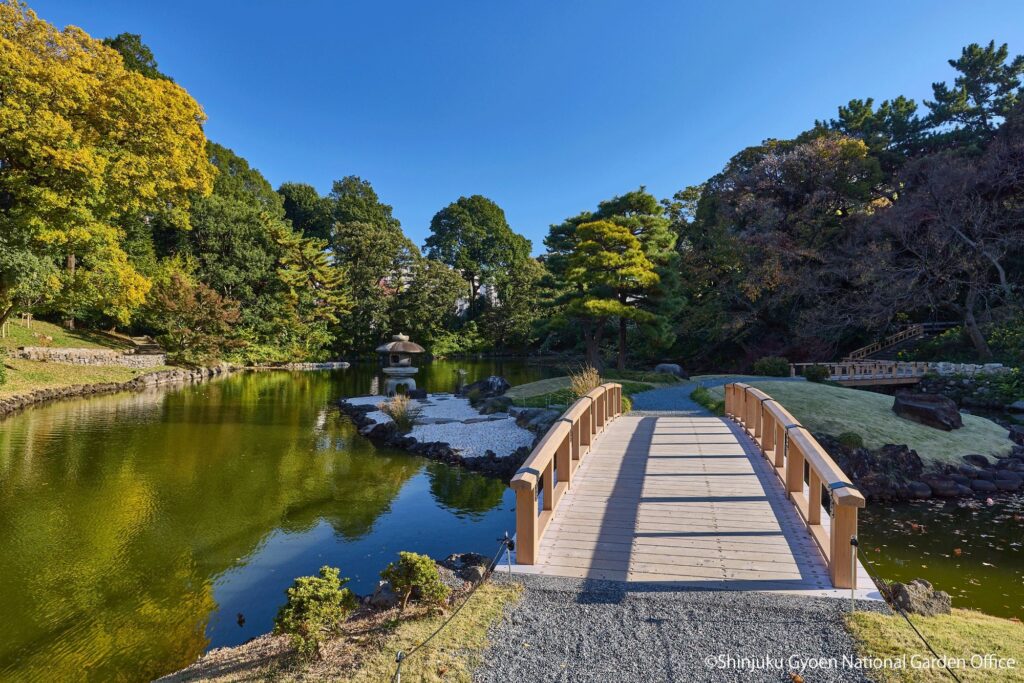
The garden’s historical significance became clearer when I learned that in 1697, a portion of this land was returned, and Naito Shin-juku was established there the following year: the very first post town on the Koshu Kaido. This location then developed into a crucial transportation hub linking Edo with Kai Province. Walking through the garden today, I observed the harmony of formal garden, landscape garden, and traditional Japanese aesthetics—a transformation that occurred after the Meiji Restoration, when the site became an Imperial garden. Even during the Edo period, Shinjuku Gyoen, centered around Tamamo Pond, was renowned as one of the notable gardens on the outskirts of the city.
Kobotoke Checkpoint: Gateway to the Mountains
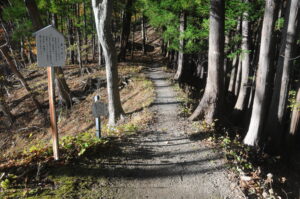
Traveling westward from Tokyo, I eventually reached the Kobotoke Checkpoint Ruins in Hachioji. During the Edo period, this checkpoint was regarded as one of the most heavily fortified along the entire Koshu Kaido, originally established by the warlord Hojo Ujiteru during the Sengoku period (from around 1467 to around 1600), at the strategic point where the road ascended toward Kobotoke Pass.
The checkpoint’s location at the border between Musashi Province and Sagami Province made it essential for controlling movement. After the fall of the Hojo clan, Tokugawa Ieyasu re-established this checkpoint as a gateway to the Koshu region, and from 1623 onward, checkpoint guards were permanently stationed here, with the duty of guard service carried out by four designated families.

©Hachioji City Board of Education
The permit stones and hand-imprint stones that remain in front of the former guardhouse offer tangible evidence of the strict passage system enforced at the time. The policy known as “iri-deppo ni de-onna”—strictly controlling weapons entering Edo and women leaving it—was rigorously applied here, with severe punishments for illegal passage. While the checkpoint itself was abolished in 1869, its ruins have been preserved as a National Historic Site, where visitors can witness for themselves how stringently travel was monitored during the Edo period.
Saruhashi Bridge: Engineering Marvel
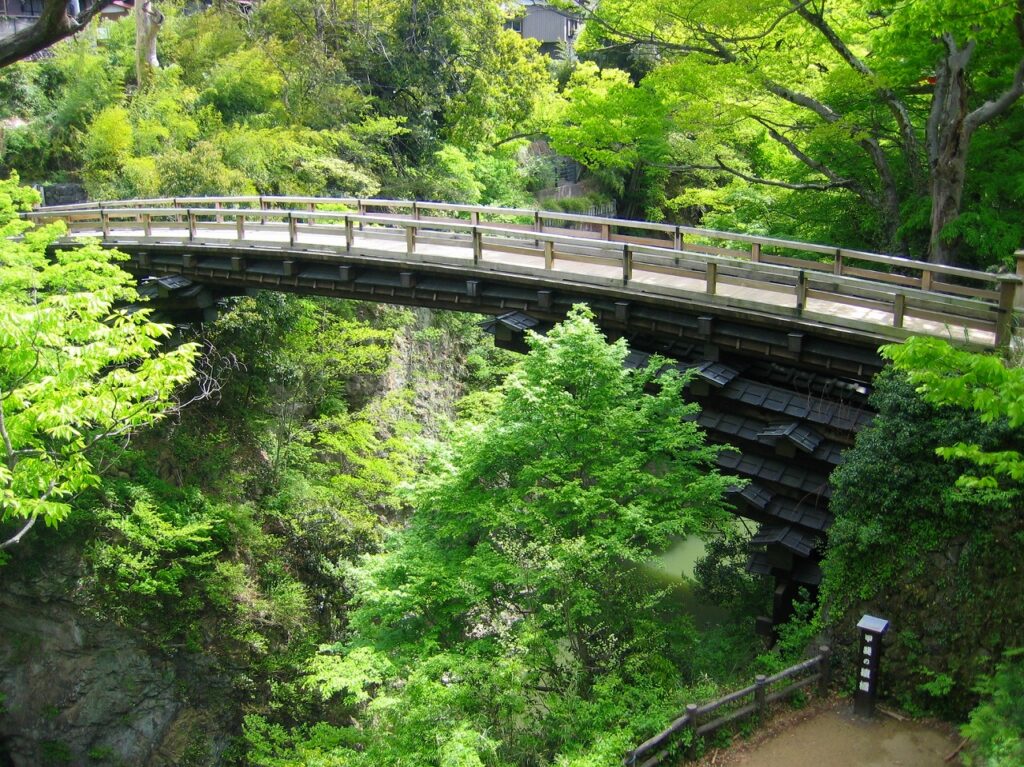
I found Saruhashi Bridge to be one of the most impressive sites along the entire Koshu Kaido. This historic wooden bridge spans the precipitous gorge of the Katsura River in the Otsuki-Tsuru area of Yamanashi Prefecture and is recognized as one of Japan’s Three Unusual Bridges. Indeed, it is unusual for its clever engineering: as the depth of the gorge makes it difficult to build traditional piers on either side, the bridge utilizes a rare cantilever structure in which four layers of wooden brackets extend from both banks to support the deck.
The design is said to resemble monkeys linking together to cross the ravine, hence the bridge’s name—Saruhashi, or “Monkey Bridge”. Since the Edo period, this structure (presently restored on the basis of historical documents and visual records) has been admired as a scenic landmark and appears in ukiyo-e works such as Utagawa Hiroshige’s “Koyo Saruhashi no Zu,” reflecting its prominence along the Koshu Kaido.
Designated a National Place of Scenic Beauty in 1932, Saruhashi is surrounded by seasonal landscapes that are particularly striking in autumn. I admired the bridge from a boat on the river below for a dramatic perspective of the gorge’s natural depth and beauty.
Katsunuma: Sweet Grapes
My next destination was Katsunuma-juku, located at the eastern gateway to the Kofu Basin, which served as the 36th post station from Nihombashi. At the time, it was equipped with one honjin and one waki-honjin (inns designated for daimyo and their associates), as well as numerous ordinary inns, making Katsunuma-juku one of the largest post towns on the Koshu Kaido.
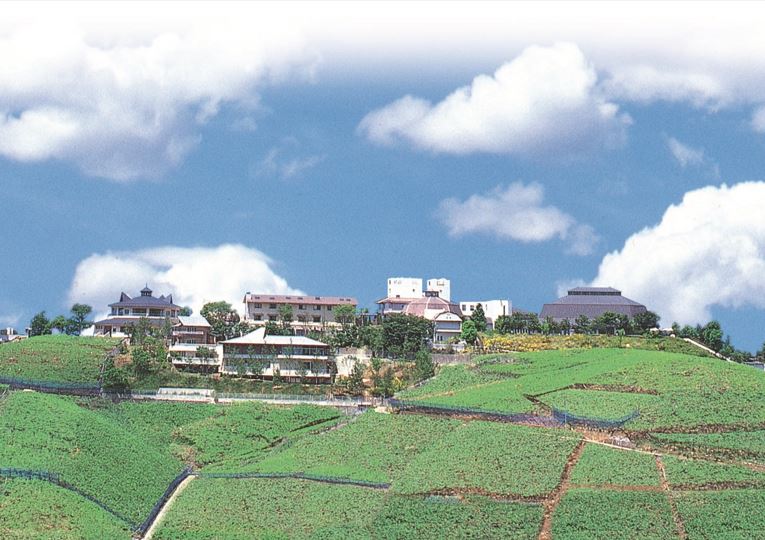
What also distinguished Katsunuma from other post towns was its deep connection to grape cultivation. In the Edo period, when refined sweets were limited, Katsunuma offered travellers grapes—fresh, dried, or preserved in syrup—a rare treat that conveyed the agricultural richness of the region. This fruit production became integral to the town’s economy and vitality.
Today, Budo no Oka (Grape Hill) symbolizes these local characteristics. This panoramic viewpoint overlooks the former post town, with its vineyards and peach orchards spreading across the Kofu Basin, all the way to the mountain ranges of the Minami Alps on the horizon.
Further along the Koshu Kaido, merchant houses with earthen storehouses remain scattered throughout the area, preserving the streetscape that flourished from the late Edo period into the Meiji era.
Kofu Castle: Journey's End
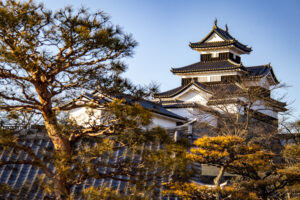
My journey concluded at Kofu Castle, a fitting endpoint for this historic route—and easy to reach, within walking distance of JR Kofu Station. Built in the late 16th century on the orders of Toyotomi Hideyoshi after the fall of the Takeda clan, the castle was positioned as a strategic stronghold facing the Tokugawa territories to the east.
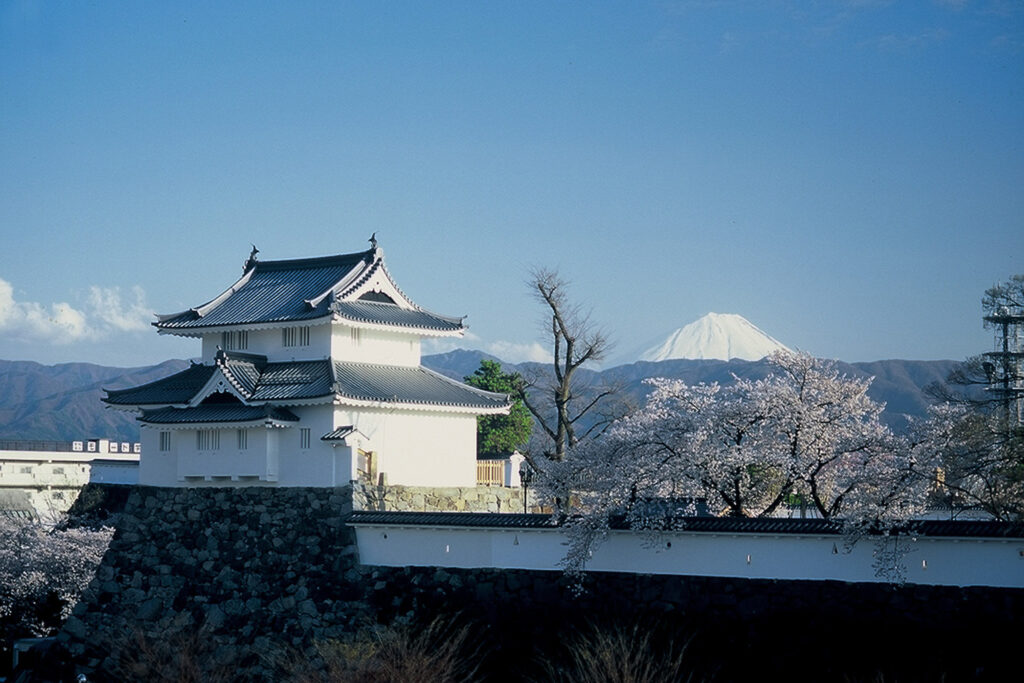
At its peak, the castle complex covered more than 20 hectares. Observing its dramatic stone walls and tenshudai—the stone foundation where the main keep once stood—I could certainly appreciate the castle’s commanding position.
Kofu Castle has since become a National Historic Site, and part of the former grounds are now preserved as Maizuru Castle Park and Kofu City History Park.
Once a military route, the Koshu Kaido offered me a precious glimpse of Japan’s past. Give it the time and attention it deserves, and it will reward you with lasting impressions and emotions. If you’re interested in travelling through a lesser-known side of Japan, the Koshu Kaido could well be the perfect place to start.