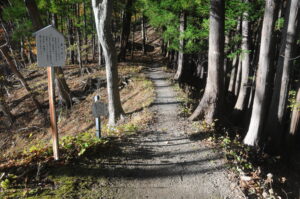
In an age when Tokyo and Kyoto are separated by little more than a three-hour nap on the bullet train, I found it difficult to imagine what travel once demanded of merchants, pilgrims, and samurai in the Edo period. Fortunately, Japan’s five historic roads still remain, preserving many of their original landscapes and waypoints. I chose Nakasendo, an inland route that once connected Nihonbashi in Edo (present-day Tokyo) with Sanjo Ohashi in Kyoto, stretching roughly 526 kilometers (about 327 miles).
Unlike the coastal Tokaido road, the Nakasendo cuts straight through Japan’s interior. Along its length, 67 post towns known as shukuba once provided travelers with food, lodging, and supplies as they crossed the highland landscapes of present-day Saitama, Gunma, and Nagano. The route included demanding stretches such as the Kiso Valley, making it longer and more physically challenging than the Tokaido. But with far fewer major river crossings, it often became the preferred alternative during flood season.
Luckily, I didn’t need to walk the full 526 kilometers to feel the pull. Over the course of a few days, I visited six road-side destinations that revealed different layers of Nakasendo, from its hardships and hospitality to its spirituality and scenic beauty.
Along the way, I encountered historic towns like Narai-juku, Unno-juku, Tsumago-juku, and Magome-juku, where Edo-period streetscapes remain remarkably intact. For history lovers like myself, the Nakasendo carries deeper resonance: The young Princess Kazunomiya Chikako once traveled this road from Kyoto to Edo for her marriage to Shogun Tokugawa Iemochi, a political union meant to steady a waning shogunate. And the echoes of her journey remained a gentle companion throughout my journey.