Tracing the Oshu Kaido — The Historic Road Connecting Edo and Northern Japan
© Sébastien Raineri
Total: 8 items
© Sébastien Raineri
The traditional crafts live and breathe in and around the Tokyo area. The origins vary from religious symbols to architectural designs to just pure enjoyment. The exploration of the endless creativity behind Japanese crafts can take you on a journey to discover some of the wonderful towns and cities beyond the capital, deepening your appreciation of Japanese culture as a whole. Let's visit five fascinating places in and around Tokyo where tradition meets creativity in the craft world.
The quality of the food and drink made in Japan are not simply a goal, but a way of life. Even in the most extraordinary restaurants and breweries in Japan, you may not find Michelin stars, but you will discover culinary craftspeople dedicated to protecting and improving the traditional methods that have produced cuisine of superior quality for centuries. From historic restaurants maintaining the Aizu food culture of northern Japan to shops perfecting the production of the humble senbei (rice cracker), the commitment of small businesses to the flavors of traditional Japan is unchanging over time. You'll find many of these establishments operating outside of central Tokyo; fortunately, the network of public transportation, with the JR East train lines as the backbone, gives visitors to Tokyo quick and easy access to most of them.
Tokyo is a city of contrasts, yet its spiritual side doesn't leap immediately to mind when you consider this vast urban metropolis. Yet, from the mountains guarding the city's western flank to its bayside bustling with the busyness of modern life, Tokyo's spiritual side is deep and ancient. Neighboring Saitama, too, has grown up on the heels of its more famous neighbor, but deep in its rugged mountains, you'll still find ancient landmarks of Japan's Shinto and Buddhist religions. Take a few steps off the beaten path to explore another side of Tokyo and Saitama and discover the spiritual roots that run deep around the Tokyo area.
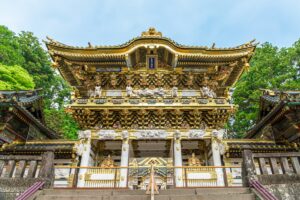
What is the Nikko Kaido? — The Tokugawa Shoguns’ Pilgrimage Road to Toshogu
In an age when Tokyo and Kyoto are separated by little more than a three-hour nap on the bullet train, I found it difficult to imagine what travel once demanded of merchants, pilgrims, and samurai in the Edo period. Fortunately, Japan’s five historic roads still remain, preserving many of their original landscapes and waypoints. I chose Nakasendo, an inland route that once connected Nihonbashi in Edo (present-day Tokyo) with Sanjo Ohashi in Kyoto, stretching roughly 526 kilometers (about 327 miles). Unlike the coastal Tokaido road, the Nakasendo cuts straight through Japan’s interior. Along its length, 67 post towns known as shukuba once provided travelers with food, lodging, and supplies as they crossed the highland landscapes of present-day Saitama, Gunma, and Nagano. The route included demanding stretches such as the Kiso Valley, making it longer and more physically challenging than the Tokaido. But with far fewer major river crossings, it often became the preferred alternative during flood season. Luckily, I didn’t need to walk the full 526 kilometers to feel the pull. Over the course of a few days, I visited six road-side destinations that revealed different layers of Nakasendo, from its hardships and hospitality to its spirituality and scenic beauty. Along the way, I encountered historic towns like Narai-juku, Unno-juku, Tsumago-juku, and Magome-juku, where Edo-period streetscapes remain remarkably intact. For history lovers like myself, the Nakasendo carries deeper resonance: The young Princess Kazunomiya Chikako once traveled this road from Kyoto to Edo for her marriage to Shogun Tokugawa Iemochi, a political union meant to steady a waning shogunate. And the echoes of her journey remained a gentle companion throughout my journey.

A Spring Walking Journey through Cherry Blossoms and Post Town Traditions
Bonsai, Bamboo, and Japanese Whisky A Green Path Crafted by Nature, Refined by Hand