

Greater Tokyo

See & Do

reset
Tanaka Shozo’s Former House

Tanaka Shozo’s Former House

The birthplace of Japan’s modern social movements, preserving the legacy of Shozo TanakaLocated in Konaka-cho, Sano City, the "Tanaka Shozo's Former House" is a Tochigi Prefecture-designated historical site and the birthplace of Shozo Tanaka. He was a politician who dedicated his life to protecting the people from the Ashio Copper Mine Pollution Incident, advocating for environmental conservation and human rights. Known as one of Japan’s earliest social activists, he devoted himself to supporting the weak and voicing opposition to injustice. The house, built in the late 19th century, still retains its original thatched-roof style. It is open to the public as a memorial site. Inside, materials and exhibits related to the Ashio Copper Mine Pollution Incident are displayed, along with detailed explanations that help visitors learn about Tanaka’s life and activities. Shozo Tanaka donated all his property to his hometown before passing away, dedicating himself to agricultural education and revitalization, embodying the spirit of selfless devotion.

Nikko kaido Oshu kaido TOCHIGI
Jakko Falls

Jakko Falls

Tracing the spiritual site founded by Kobo Daishi — listen to the murmurs of flowing water in the quiet forest Jakko Falls is located in Nikko City’s Chugawa area. With a height of about 50 meters and a width of 6 meters, it cascades down in seven tiers. The surrounding forest is lush, and the mountain trail offers a deeply serene atmosphere, earning its reputation as a hidden scenic spot known only to locals. The site was once home to the ancient Jakko-ji Temple, said to have been founded by Kobo Daishi in 820 AD. During the Meiji era, due to the government’s separation of Buddhism and Shintoism, the temple was converted into Jakko Shrine, and religious legends are still passed down today. Along the trail to the waterfall lies the massive Ikeishi Stone, shrouded in dense forest, adding a mystical aura to the site. From Nikko Tamozawa Imperial Villa Memorial Park, it takes about a 20-minute walk to reach the falls, making it a perfect spot for hiking and enjoying seasonal scenery, especially during spring and autumn.

Nikko kaido Oshu kaido TOCHIGI
Nikko Coffee Nishisando

Nikko Coffee Nishisando

The popular café chain Nikko Coffee, beloved by fans across Japan, opened its Nishisando branch in March 2020! In summer, visitors can enjoy shaved ice made with natural ice, while in mid-October, the shop also offers delicious treats like wagyu beef buns. With a concept of “Good things from Nikko, good things from Japan,” Nikko Coffee not only serves rich, aromatic coffee, but also sells handcrafted goods from Nikko and Tochigi Prefecture, as well as carefully selected items delivered from all over Japan.

Nikko kaido Oshu kaido TOCHIGI
Oyama 2,000 Cherry Blossoms Festival

Oyama 2,000 Cherry Blossoms Festival

In late March, Japan's most famous variety of cherry blossom, Someiyoshino, will begin to bloom, coloring the city with its delicate pink flowers. But in Oyama City, the special local variety, Omoigawa-zakura, makes Oyama different. Omigawa-zakura were found in a garden at a local monastery about 70 years ago. Beacause the Omigawa bloom about a week after the Somei Yoshino, meaning visitors can enjoy cherry blossoms for almost a month. Get ready to experience the beauty of Oyama City this spring. Many events and light up held on every cherry bloom spots in Oyama during the cherry blooming. ◆Night cherry blooming spots ①Shiroyama Park(1-1 Shiroyama-cho, Oyama City) ②Mamada Hachiman Park(2330 Mamada, Oyama City) ③Sakura Avenue nearby Toyohogawa River(nearby Kami-ishitsuka, Oyama City) ④Omoigawa Onsen(1475 Kizawa, Oyama City)

Nikko kaido Oshu kaido TOCHIGI
The Tale of Wisteria Blossoms -The Great Wisteria Festival 2025

The Tale of Wisteria Blossoms -The Great Wisteria Festival 2025

Selected as the only one for Japan in "CNN’ Top 10 Dream destinations for 2014" the Ashikaga Flower Park will be holding its "The Tale of the Wisteria~ Large Wisteria Festival".   The size of the park is a substantial 94,000㎡, and boasts over 350 wisteria trees, allowing visitors to enjoy the sheer abundance of the beautiful flowers in bloom. Various colors of wisteria bloom in order, from pale pink, purple, white, to yellow,which allows you to enjoy all of the wisterias for about one full month.   A wisteria shelf spanning 1,000㎡ is for the 150 year old large wisteria tree with a 80m long tunnel of white wisterias. An extremely rare double-petal wisteria shelf, and the white wisteria tunnel.   It has also a beautiful light-up wisteria at night.  

Nikko kaido Oshu kaido TOCHIGI
Haga Onsen Roman no Yu

Haga Onsen Roman no Yu

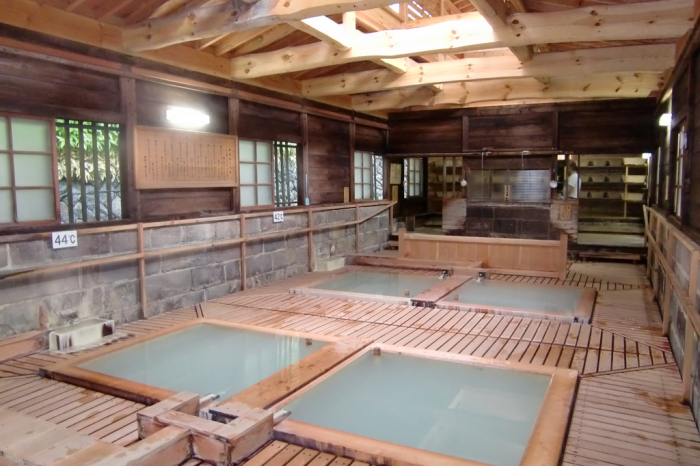
Haga Hot Spring and Roman Baths is a place where groups and individual visitors can casually enjoy a day at a hot spring.The color of the water that gushes forth from 1,500 meters below ground is a surprisingly gold hue.Another attractive feature is that there are two different hot springs to be enjoyed in one location. The first is good at keeping skin beautiful, making it soft and smooth. It is also known as a bijin no yu (Japanese for "beautiful person's hot spring"). The other spring has heat-retaining properties that help remove the cold within your body. It is also called an atatamari no yu ("warming hot spring"). The spa features open air baths, large public baths, massaging aerated baths, flowing water baths, and saunas. Other facilities include a lounge area, small Japanese-style rooms that can be used to host banquets, and more. The spa also holds beer gardens in the summer."

Nikko kaido Oshu kaido TOCHIGI
Kurita Museum

Kurita Museum

One of the largest museums of ceramics with Imari and Nabeshima collections in the world. Here, on the outskirts of Ashikaga, on 24.5 acres chosen for its picturesque scenery and taking advantage of nature, is a garden of mainly wild grass. In the garden is the main museum building, a historical building, a memorial church for unknown potters, and the pottery hall as well as the main gate, and the Holland Hall. A large feature of the museum is that it displays only Imari and Nabeshima pottery wares of the Edo period  created by the Nabeshima clan."

Nikko kaido Oshu kaido TOCHIGI
Nantaisan Tohai Kosha Taisai (Mt. Nantai Climbing Festival)

Nantaisan Tohai Kosha Taisai (Mt. Nantai Climbing Festival)

Climbing Mt. Nantai, a Sacred Site in Nikko The Tohai Kosha Taisai is the largest festival of Futarasan Jinja Shrine Chugushi, and has been held continuously for over 1,200 years since the late Nara period. Deeply rooted in the worship of Mt. Nantai, the festival takes place annually from July 31 to August 7. During this period, many visitors climb Mt. Nantai to pay their respects. In addition, pilgrims can climb Mt. Nantai at night during the festival. This allows climbers to reach the summit and witness the sunrise. At the shrine office, participants can receive items such as amulets, climbing certificates, sacred water, and coffee. Every year, around 2,000 climbers gather at night for this event. Before dawn, they set out, reaching the summit at around 4:40 a.m. to witness the rising sun. The sight of the glowing sun emerging from behind the sea of clouds is a truly awe-inspiring spectacle. The festival continues with rituals and ceremonies at the mountaintop.

Nikko kaido Oshu kaido TOCHIGI
Furukawa Ashio History Museum

Furukawa Ashio History Museum

Overview of the Furukawa Ashio History Museum Ashio Copper Mine is one of the most important copper-producing sites in Japanese history. Discovered during the Sengoku period (1550), it was later mined under the direct control of the Edo shogunate. It once served as an essential source of material for Kan’ei Tsūhō, the currency of the time. As output later declined, the mine was taken over by the Furukawa family during the Meiji period. Due to advances in technology, new ore veins were found, and under the then national policy of enriching the country and strengthening the military, the mine prospered, making the Furukawa family magnates of the mining industry.   The Furukawa Ashio History Museum tells the stirring story of that industrial dawn. In addition to models of the Ashio Mining Office and stories of successive managers, it also exhibits the various tools used by miners in those days, recounting the history of the Ashio area.

Nikko kaido Oshu kaido TOCHIGI
Izuru Soba

Izuru Soba

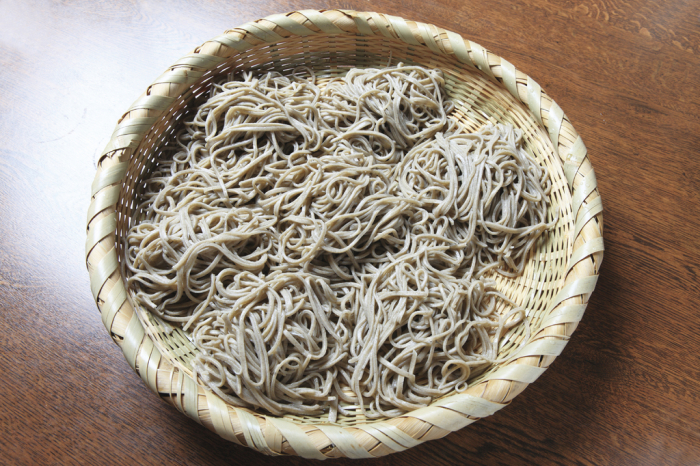
Hand-ground stone-milled soba noodles – savor the history and flavors of Manganji Temple Izuru Soba originates from Tochigi City’s historic “Izuru Manganji Temple.” In the past, soba was made by temple parishioners and locals as an offering, and it gradually became a well-known local delicacy. Along the Izuru Kaido Road, many soba shops and guesthouses line the route, allowing visitors to enjoy natural scenery while savoring freshly ground stone-milled soba noodles. The Izuru area also promotes “Tochigi Edo Cuisine,” offering not only traditional zaru soba but also unique creations such as white soba, soba flour sweets, and the specialty “Koedo Soba Kaiseki.” This is not only a culinary experience but also a cultural journey that blends history, faith, and gastronomy.

Nikko kaido Oshu kaido TOCHIGI
Kitagura Cafe Higano

Kitagura Cafe Higano

Housed in “Kitagura,” a building constructed in the mid-Meiji period and registered as a Tangible Cultural Property of Japan, Kitagura Cafe Higano is located along Tochigi City’s famous Kuranomachi Street, a popular sightseeing area. The café is operated by Higano Shoten, a traditional confectionery shop founded in 1922. In addition to freshly brewed hand-drip coffee and homemade sweets, visitors can purchase the shop’s signature rice crackers, Okaki, as souvenirs. For coffee lovers, this is the perfect spot to relax and enjoy a quiet, charming atmosphere in the heart of historic Tochigi.

Nikko kaido Oshu kaido TOCHIGI