

Shirahata Shrine
It is dedicated to Samukawahikono Mikoto, which is the same deity as the Sagamikoku Ichinomiya Samukawa Shrine, and Minamoto no Yoshitsune, who is a hero of the history.
Total: 1140 items
It is dedicated to Samukawahikono Mikoto, which is the same deity as the Sagamikoku Ichinomiya Samukawa Shrine, and Minamoto no Yoshitsune, who is a hero of the history.
As you go up the road from Hakken shrine in Kami Kisawa, you can see Mt. Fuji and fan-shaped farm fields (Dan dan batake) on the mountainside.
The path leading down to Keshozaka is a historically dangerous path where the statue of Minamoto no Yoritomo stands.
Shonan Kaigan Park is home to a number of facilities, including Surf Village, which houses the Park Management Office, Salt Breeze Plaza, Water Plaza, Kids Plaza, Palm Tree & Lawn Plaza, and the Multipurpose Plaza. It is a place where visitors can deepen their understanding of the sea, and serves as a base for general park visitors. Visitors can also enjoy activities such as beach sports and experience lifesaving activities.
This high-quality cruiser is endowed with stylish exterior design and modern interior. You can have a guided view of industrial night views, container berths, and other industrial locations from the ocean.
The island has been listed as a two-star destination in the revised third edition of Michelin Green Guide Japan. It has many scenic spots, with the southern hiking course offering views of the majestic Pacific Ocean and the strangely-shaped rock ‘Horseback Cave Mouth', while on the western part of the island, you can see views of Mt. Fuji over Sagami Bay. In addition, about 700,000 double-flowered daffodils planted all over the island are at their best from mid-January to early February.The southern part of Joagashima features untouched nature. Jagged cliffs hang over the white and blue waves, creating a remarkable landscape. It is also home to hiking trails and is a dream site for hikers and photographers alike. On the south side of the island you can find Jogashima Park. The park has an observatory, a picnic area, and a 16-meter-tall green lighthouse with a vegetable motif, the Awasaki Lighthouse. The gorgeous cliffs make a perfect place for hiking and resting.Jogashima is a wonderful place to visit at any time of the year. In particular, from mid-January to mid-February, approximately 700,000 double-layered daffodils are in full bloom. You can also observe the Japanese cormorant, which is designated a protected species by Kanagawa Prefecture.
Yokohama Zoological Gardens "ZOORASIA" is a zoo themed around “coexistence and harmony of life and nature.” It is divided into 8 zones according to the world's climatic regions, with 570 animals of around 100 species (as of the end of March 2025), including rare animals like okapi and proboscis monkeys. Feel like you've taken a trip around the world at this zoo, and enjoy the special menu at the dining area.The zoo will extend its opening hours on Saturdays, Sundays, and holidays in August, and will hold a special summer evening event where the zoo will open to the public at night, an experience otherwise unavailable to the public. Visitors can enjoy a different view of the zoo at night when the zoo is decorated with illuminations and the animals are more active!
OCEANS.Club is a stand up paddle surfing SUP school. We also lend out supplies.
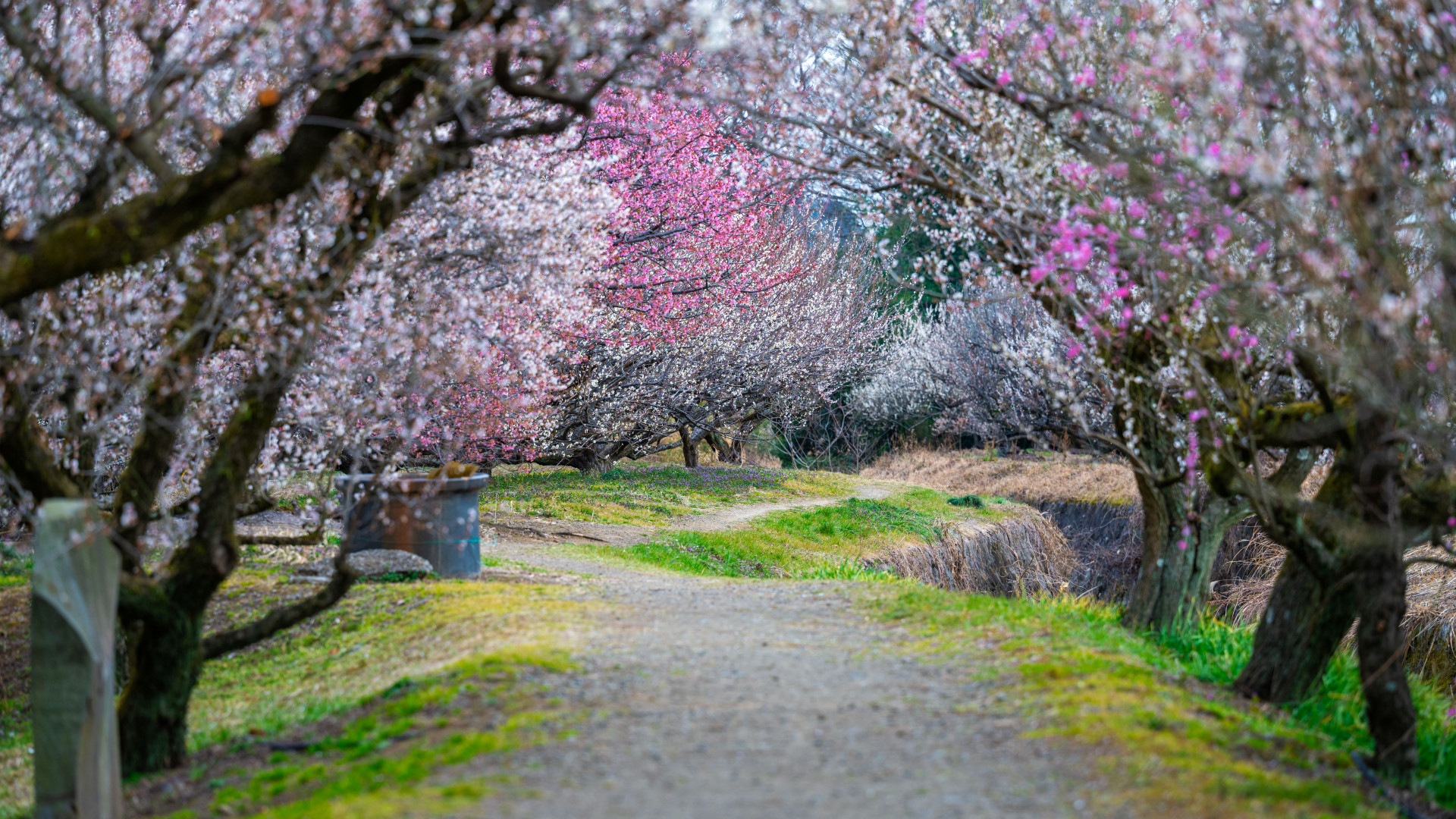
The Odawara Plum Festival is held from early February through early march each year. The Soga Plum Forest is the primary venue, and that is made up of three areas: Bessho, Hara, and Nakagawara. Each is operated primarily by the farmhouses that are located there. Bessho is the largest of the three, and features a citrus and vegetable stands, souvenirs, eateries, and more.
With the concept of "made with 720,000 people" and "seeking symbiosis of people, things, and nature", we greet everyone with entertainment such as citizens' crafts, a parade, and picture contests. Photos provided by Sagamihara Tourism Association
A Shinto lodging for pilgrims to Mt. Oyama. You can try sutra copying and copying purification text, or relax in the bath after climbing the mountain. Meals are tofu-based kaiseki courses using locally-grown seasonal ingredients and homemade Oyama tofu. Sutra copying for day visitors is also available.
This historical temple, which holds numerous cultural assets, was built in 829. The main hall has held numerous cultural events. The kitchen, which is a registered tangible cultural property, can hold meetings, receptions, etc., while the temple precincts can be used to stage outdoors events.
Enoshima Yacht Harbor opened for yachting events for the 1964 Tokyo Olympics. Since its opening, though being one of the few public yacht habors in Japan, it has contributed to the spreading of yacht activities. It is the venue for sailing at the 2020 Tokyo Olympic Games.While on Enoshima Island make sure to visit the Yacht Harbor Building to learn all about the Yachting World Cup, the 1964 Tokyo Olympics and the upcomng 2020 Tokyo Olympics' yacht competition.
A poetic symbol in the uraga inlet. It’s a ferry boat connecting two points in the town apart with inlet. It's an unusual municipal road (Route2073) with a long history since Edo period
Along the Tokaido route from Nihonbashi to Kyoto, Mount Fuji is usually seen on the right when heading to Kyoto. However, you can see Mount Fuji on the left at this rare spot, upon the Toriidobashi Bridge located along National Route 1. The scenery of the past is captured in Hiroshige Utagawa’s (Hiroshige Ando) ukiyo-e painting “The Nango Pine Grove with Mount Fuji to the Left” (Nango no matsubara hidari fuji). Pine trees line the avenues of the path leading to the Tsurumine Hachimangu Shrine, leaving some traces of the past.
Wife and son, Morotoki, of Shogun Hojo Munemasa built this temple in 1281. In this temple there is a 'Kanro no I (well)' , one of the 10 Kamakura Wells. This temple ground is designated as a historic spot of Japan.The Donge-Den houses the Three Statues of Buddha. The leftmost statue represents the past, the center the present, and the right the future (as seen from the main entrance).Built in 1924, the thatched-roof Shoin offers a beautiful view of the gardens throughout the seasons.
Johotsugan-ji temple, established by the ascetic Mokujiki monk Tanzei Shonin, is the main temple of the Tanzei sect of Tendai Buddhism.
Olympic fountain pond and Morse monument are in this park. At Tennou Festival, portable shrines called Mikoshi will walk into the sea from this shore.