

Lake Sagami Onsen (Hot Spring) Ururi
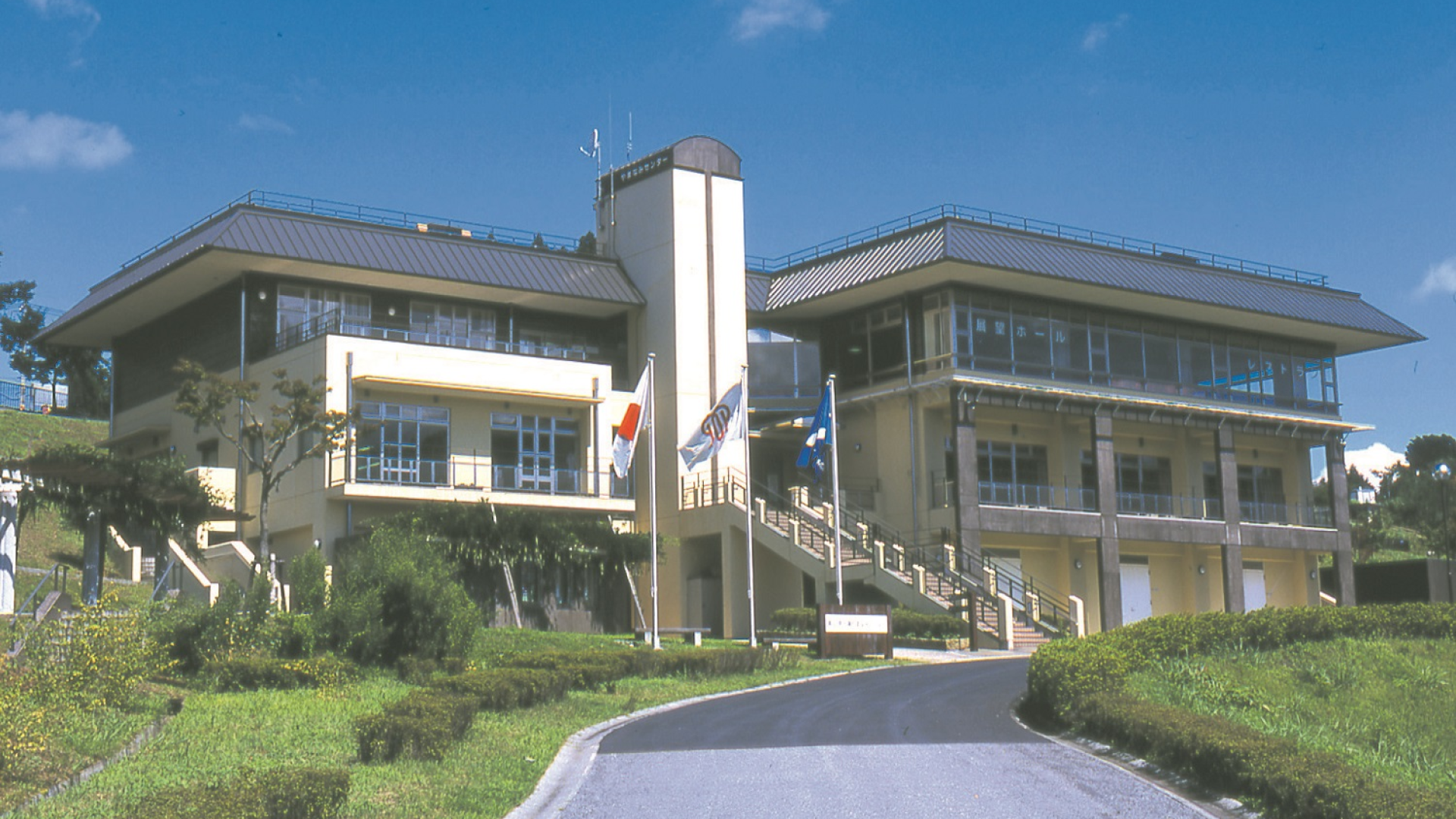
Lake Sagami Onsen (Hot Spring) Ururi is a bathing facility for day trips, built on a hill surrounded by Sagamiko Forest.
Total: 1140 items
Lake Sagami Onsen (Hot Spring) Ururi is a bathing facility for day trips, built on a hill surrounded by Sagamiko Forest.
Wanpaku Land, with an area three times that of Tokyo Dome, has many enjoyments that incorporate physical activity, such as roller slides and complex playground equipment. In particular, the centerpiece is “Odawara Castle Adventure,” which has Odawara Castle as its motif. It is not just playground equipment but is also a rare piece of equipment with a local sightseeing spot as its concept.
This Tourist Boat Terminal serves as the departure and arrival point for cruises such as the "Red Brick Café Cruise" and the "Night Factory Jungle Cruise". It is approximately a 15-minute walk from Bashamichi Station or Nihon-Odori Station.
The Odakyu Hotel de Yama, located on the shores of Lake Ashi in Hakone, is an authentic resort hotel in an unbeatable location, with Lake Ashi sparkling before your eyes and a magnificent view of Mount Fuji opposite the garden. Built on the site of the former villa of Baron Koyata Iwasaki, the hotel still retains strong traces of its former days and exudes a romantically classic atmosphere. The large garden boasts a vast area that was inherited from the former Iwasaki Residence, designed to make the most of the natural characteristics of the hillside so that the flowers and trees of the four seasons grow in harmony with the majestic form of Mt. Fuji, as well as the deep blue waters of Lake Ashi. Colorful azaleas and rhododendrons begin to bloom in May in the vast garden, creating a spectacular view against Mt. Fuji and Lake Ashi in the background. In 2022, the garden's azaleas were recognized as "National Collection No. 10" by the Japan Association of Botanical Gardens, and in 2023, the rhododendrons were recognized as "National Collection No. 15". 230 hydrangeas of 25 varieties bloom from mid to late June. The Rose Garden is at its best twice a year, in June and October, which fills the garden with a sweet fragrance of rose. We hope you enjoy this garden filled with flowers from season to season to your fullest desire!
It is a shop with a garden, which is rare among rental kimono shops along Komachi Dori in Kamakura. The store interior has an area of 182 square meters, and visitors can take photographs with their own cameras, and head to the tourist spots right away. Visitors can choose from 1000 kimonos of all types, as if choosing clothes. Same day service can also be provided, but advanced reservation is recommended.
Hakone Shrine is an ancient shrine celebrating its 1266th anniversary. Founded in 757, the first year of the Tenpyo-Hoji Era, at the beginning of the Nara Period (710-794), when Mamaki Shonin, who was in ascetic training on Mount Hakone, was entrusted by the Great God of Hakone to the shrine at its current location by Lake Ashi. During the Kamakura period, Minamoto no Yoritomo deeply worshipped Hakone Shrine, giving birth to the custom of nishomode (pilgrimage to two shrines). Since then, the shrine has flourished as a place of reverence for warriors such as the regent Hojo and the warlord Tokugawa Ieyasu, as well as a sacred place for Shugen (Japanese mountain asceticism). In modern times, with the construction of the Hakone Road, Hakone became a sacred place of worship for the common people, and belief in Mount Hakone as a deity highly virtuous for protecting against bad luck, fulfilling one's desire, and ensuring traffic safety became even more popular. The approach from the Heiwa-no-torii (peaceful gateway) by Lake Ashinoko to the main shrine is flanked by rows of cedar trees more than 600 years old, giving the shrine a majestic appearance, behind the vermilion-lacquered Gongen-zukuri main shrine building is a pure forest of himeshara, a natural treasure of Kanagawa Prefecture, and the Gongen Mitarashi pond and Lake Ashi below reflect the vermilion Peace Gate and the sacred Mount Fuji, surrounding the shrine with beautiful nature. Many visitors from around the world come to pay their respects at the Kuzuryu Shrine (Shingu and Hongu), which is a shrine revered not only for its good fortune and prosperity, but also for its protection of money, prosperity in business, and match-making, particularly during the Tsukinamisai held at the main shrine on the 13th of each month. [Divine virtues] Good luck repelling of bad luck, fulfillment of one’s desires (protection against bad luck), traffic safety, match-making, family safety, and business prosperity On July 31st, the shrine organizes the Ashinoko Kosui Matsuri Festival to celebrate a legendary dragon. Monks sail the lake on pirate ships offering red rice to the depths below. Floating lanterns illuminate the lake waters while fireworks light the skies above.Lake Ashinoko Summer Festival Week: Hakone Summer Festival offers a variety of events such as the biggest annual festival of Hakone Shrine with Shinto celebrations and rituals, fireworks, and more. Many fireworks will be launched at a total of six fireworks festivals, adding color to the summer Hakone sky.
It started as a cemetery for sailors of Commodore Perry's squadron. Now, more than 5,000 foreigners from about 40 countries are buried here. The tombs of some famous contributors to the modernization of Japan are here. It is also an important cemetery from a historical point of view.
This is a fire festival held during Little New Year (around January 14) that has continued since the Edo period. In summer, nine sites are set up on the beach, which is crowded with bathers, and fire is lit to pray for good health and family safety. The festival is designated as an Intangible Folk Cultural Property of Japan and attracts many people every year. It is said that if you eat dumplings cooked over the fire you will not catch a cold, and if you write your name on a piece of paper that you burned and it flies up high it will make your arms grow longer, and if you take a pine cinder and put it on your roof it will be a charm to ward off fire.
The railroad in front of Kamakura High School is a famous site in Slam Dunk.
Oisojoyama Park is a park where the former Mitsui Zaibatsu owner had his villa as well as where former Prime Minister Shigeru Yoshida spent his last years.
Hasedera Temple is a famous historical temple that enshrines the statue of Hase Kannon as its principal deity. The main temple building houses the Kannon Museum, a garden, and offers visitors a chance to become familiar with the scenic beauty of Kamakura. The solemn "Kannon-do" and the temple grounds surrounded by beautiful trees and ponds, and lanterns distributed to visitors, encase the area in a beautiful lights that offers a sense of connection. A private tour of the temple grounds is also held by the priests of Hasedera Temple. In addition to the guided tours of the Keidai required sites, visitors will be show through the museum and also have the opportunity to visit Kannon in the main hall up close and personal.Originally established in 736 when the Kannon stature was said to have washed ashore, the most recent construction dates back to 1985.Enjoy a panoramic view overlooking Kamakura's coastal city while taking a leisurely break.Opened in 1980, the Kannon Musem exhibits the Kannon Bodhisattva, the principal mage of Hasedera Temple, as well as many other ancient artefacts.According to legend, the nine-meter wooden statue of the Kannon (goddess of mercy) you can see here was carved in 721 CE in Nara, then cast into the sea, washing up in 736. In June and July, colourful hydrangeas bloom around the temple.The precincts with the majestic Kannon-do hall and lovely trees and ponds are enveloped in a light that “connects,” like the lanterns given to those who visit.
A base facility that distributes information on Odawara tourism and provides content for visitors to experience the traditional culture of the region. This facility also features various hands-on workshops, a café, museum store, bicycle rentals, and rental space. The building itself is made of Odawara cypress and Japanese cedar.Visitors can experience Odawara's traditions and culture through the “Odawara Chochin,” “Yosegi-zaiku,” “Kaisendon,” and a variety of other content that both adults and children will enjoy through same-day reception (no reservations required).
3 Stars Pancake can be found nestled away in the Musashi-Kosugi area of Kawasaki. Here they serve up sweet doses of happiness through their thick, fluffy pancakes that are double-cooked: grilled first on the teppan, then baked second in the oven.Try from their menu of classic pancakes, including their signature Mitsuboshi (3-star) Pancake (using Hokkaido vanilla cream, raw cream and Canadian maple syrup) or the decadent chocolate pancake (using 70% Belgian cocoa and served with berry sauce and vanilla ice cream), or try from their seasonal specials.
Built here in the early 700 A.D., Daijoin is a temple where you can practise waterfall meditation. Waterfall meditation is a way to liberate and regenerate oneself, and gain a sense of unity with the natural world. The monks at Daijoin practise waterfall meditation, and offer guidance to visitors who wish to try it themselves.
The store is located just before the entrance to the grounds of Tsurugaoka Hachimangu Shrine. The company was founded here, and the store is filled with affection for Kamakura Beniya. It has the widest selection of products out of all Kamakura Beniya stores, including both standard items and limited edition items unique to the Hachimangu-mae main store.
We currently offer a tour course for each of the "Ajinomoto", "Hondashi", "Cook Do" and Oyako (parent and child) "Knorr" soups. Visitors can see how each product is made, including arranging raw materials, manufacturing processeses, and quality control checks with consideration for safety and security. Board our "Aji Panda" bus to be taken to the factory.
"Minshuku Hara (inn)" is a Japanese style inn that evokes an old-style Japanese house and is located in a quiet fishing village. They provide fresh and seasonal seafood, such as a striped beak-perch, in a style of ikezukuri (seafood are arranged on a platter that look lifelike). This is the service unique to fishermen's house. Guests can experience making fishermen-style pot meal, tokoroten (jellied agar), and dried seafood. Okami (the proprietress of the inn) was selected as one of the "100 Best Mothers of Farmers, Fisheries, and Inns". It is a one minute walk to get to Mitohama coast.About 1 minute from Mitohama Beach, this is an inn where you can enjoy home-cooked meals made with homegrown vegetables and fresh seafood caught that day by the owner-fisherman. The inn is run by a well-known Okami (landlady) who was the only one in Kanagawa Prefecture to be ranked as one of the Best 100 Okami. Stay at an inn with a homey atmosphere and dine on delicious Japanese home cooking.
It is a bridge over Sagami River which connects Ebina City and Atsugi City. Initially, it was designed to be underwater during a flood so that it could easily be rebuilt even when it was washed away. In 1996, however, it was constructed as a permanent bridge.