
Greater Tokyo

See & Do

reset
Higeta Indigo Dyeing Workshop

Higeta Indigo Dyeing Workshop

Higeta Indigo Dyeing Workshop, established during the Kansei era (1789–1801), is a fabric-dyeing and weaving workshop. It is a rare workshop in Tochigi that inherited traditional indigo dyeing. It still uses the dyeing area created at the time of its establishment to dye the fabric in the traditional manner. Inside the 200-year-old building with a thatched roof, 72 earthenware indigo vats are neatly arranged. The building and the vat area are Tochigi Prefecture’s tangible cultural assets, and visitors can freely visit and see them. Indigo is a plant dye that has long colored ethnic costumes. Long ago in Japan, 80% of commoners’ cloths were dyed with indigo. The indigo color produced by the traditional Japanese indigo dyeing and plant dyeing methods is called Japan Blue and, together with the dyeing methods, is highly recognized around the world. The workshop engages not only in dyeing but also cotton cultivation, yarn-making, yarn dyeing, and handweaving in order to preserve the cotton tradition essential to the indigo dyeing culture. The workshop sells indigo-dyed cotton fabric, coasters, and tablecloths. Please come and see the traditional techniques and the beauty of indigo.

Nikko kaido Oshu kaido TOCHIGI
Yuki Tsumugi Kimono Dressing at the Oyama Honba Yuki Tsumugi Craft Museum

Yuki Tsumugi Kimono Dressing at the Oyama Honba Yuki Tsumugi Craft Museum

The Oyama Honba Yuki Tsumugi Craft Museum offers visitors the experience of wearing an elegant kimono made from the fine silk textile “Yuki Tsumugi”. The process of refining the traditional Yuki Tsumugi silk is inscribed on UNESCO’s Representative List of the Intangible Cultural Heritage of Humanity. In order to allow people to fully appreciate the comfort of their garments the museum provides all-day kimono rental including kimono and obi with dressing assistance included free. Come and experience the light and warm texture of genuine Yuki Tsumugi!

Nikko kaido Oshu kaido TOCHIGI
Coco Farm and Winery

Coco Farm and Winery

Coco Farm and Winery offers tours of the winery, a fine selection of wines and food prepared with freshly picked local vegetables. Enjoy lunch at the restaurant with an incredible view of the vineyards. Stroll up to the hill top with a glass of wine in hand and sit back and relax under white parasols to enjoy sunshine! The stylish bottles available in the shop are perfect for souvenirs. Or why not stay overnight at one of the local Ashikaga hotels after a day of exploring?

Nikko kaido Oshu kaido TOCHIGI
Pottery Making Experience (Mashiko)

Pottery Making Experience (Mashiko)

Developed since the19th century for its fine quality and proximity to the big market Tokyo, Masiko-yaki pottery has long been liked for its daily use items such as pots, water jars and teapots. There are nearly 260 kilns, 50 shops and potters of youth and experience who create works of great variety. Pottery markets held in spring and autumn attract hundreds of thousands of Mashiko-yaki lovers. Even beginners can join workshops to learn how to decorate, hand-form or use a potter’s wheel, and enjoy authentic ceramic art.

Nikko kaido Oshu kaido TOCHIGI
Furukawa Ashio History Museum

Furukawa Ashio History Museum

Overview of the Furukawa Ashio History Museum Ashio Copper Mine is one of the most important copper-producing sites in Japanese history. Discovered during the Sengoku period (1550), it was later mined under the direct control of the Edo shogunate. It once served as an essential source of material for Kan’ei Tsūhō, the currency of the time. As output later declined, the mine was taken over by the Furukawa family during the Meiji period. Due to advances in technology, new ore veins were found, and under the then national policy of enriching the country and strengthening the military, the mine prospered, making the Furukawa family magnates of the mining industry.   The Furukawa Ashio History Museum tells the stirring story of that industrial dawn. In addition to models of the Ashio Mining Office and stories of successive managers, it also exhibits the various tools used by miners in those days, recounting the history of the Ashio area.

Oshu kaido Nikko kaido TOCHIGI
Midori Nouen

Midori Nouen

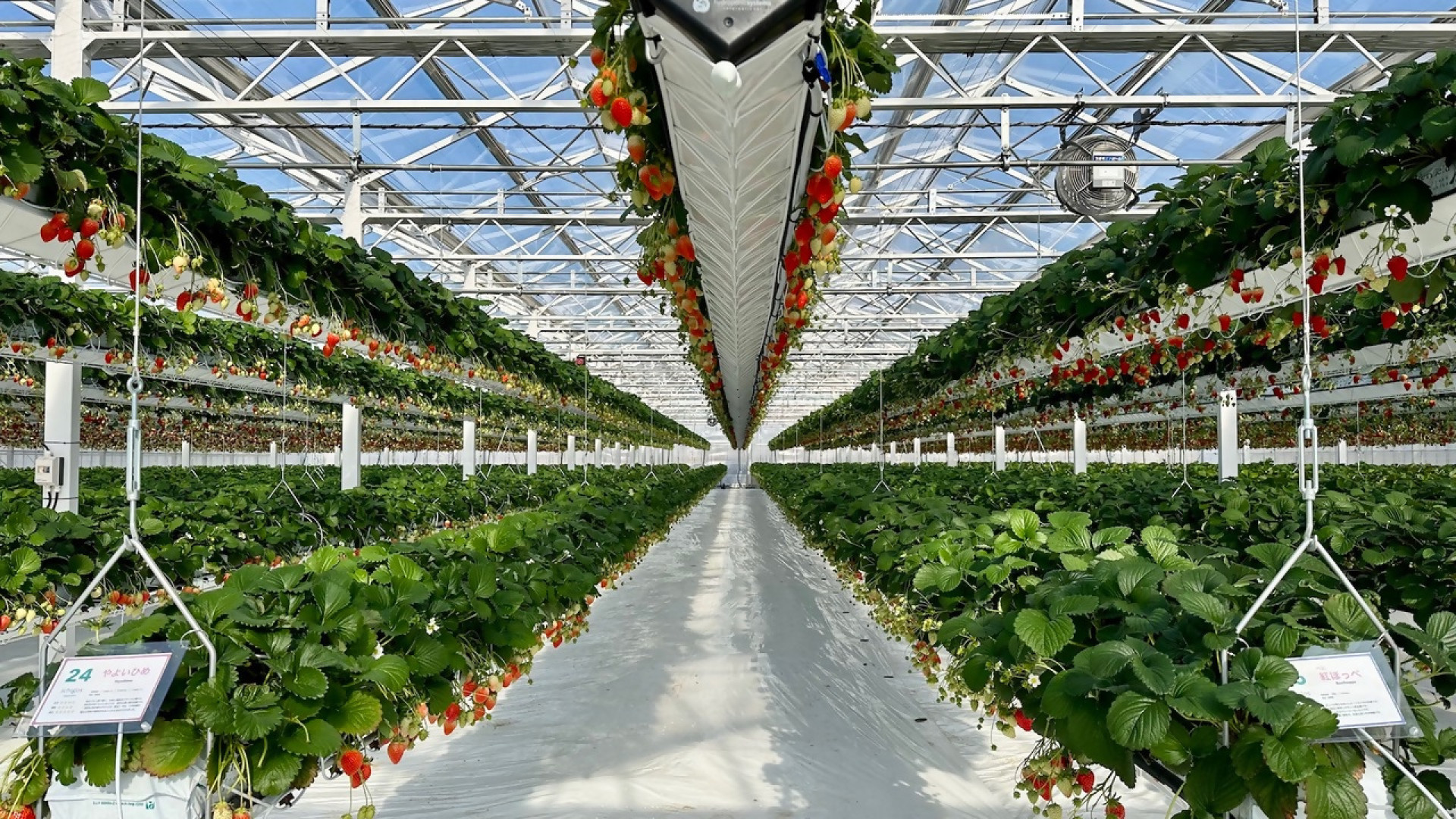
All staff at Midori Nouen love farming, want to make farming more fun, and believe in the power of farming. They grow strawberries of the Tochiotome and Tochi-Aika breeds, as well as asparagus and buckwheat. They prepare the soil using fully matured compost called Midori Compost and locally produced powder bamboo compost. The temperature around the farm fluctuates a lot and sometimes goes down to -8ºC. This makes vegetables grow while increasing their sweetness and tastiness in order to withstand the cold. Midori Nouen’s Tochi-Aika received the gold prize at the First National Strawberry Awards hosted by the Japan Vegetable Sommelier Association. At the shop on the farm, you can purchase not only strawberries but also processed products including strawberry jam, strawberry puree, and popcorn.

Nikko kaido Oshu kaido TOCHIGI
KAMAYA ~Café du Reverbere~

KAMAYA ~Café du Reverbere~

KAMAYA ~Café du Reverbere~ is a café restaurant. Dishes made with Mae Nikko Wagyu and Nikko Pork, and homemade sweets using strawberries produced in Nikko are popular here. There are also halal and vegan dishes. Renovated from a bank, the restaurant is designed as a retro-style café terrace with street lamps. It is only a one minute-walk away from the Tobu-nikko station, which is the gateway to the Nikko area. The restaurant mainly uses hand-picked local ingredients, including yuba, a specialty in Nikko. Most dishes served here are gluten-free. The restaurant’s recommendations are “NIKKO Donburi,” a rice bowl topped with a generous amount of local Mae Nikko Wagyu roast beef, and “THE NIKKO Hamburger Steak Set Using Mae Nikko Wagyu and Nikko Pork.” Both are popular dishes served daily while quantities last.

Nikko kaido Oshu kaido TOCHIGI
N’s YARD

N’s YARD

N's YARD is a private modern art space displaying the works of modern artists and was created with the intention of making a space available for visitors to casually see the works of the artist and sculptor, Yoshitomo Nara. The museum has a café and a museum shop, too. Five exhibition rooms showcase not only Nara’s works including paintings, drawings, and 3D art pieces, but also Nara’s collections of other artists’ works, records, and dolls. Exhibitions are planned and designed by Nara. Besides the exhibition rooms, there is also a café, which offers light meals, drinks, and desserts, made with carefully selected ingredients, and a museum shop that sells items produced exclusively for this museum. Photo: Mie Morimoto ※The images may differ from the current facility appearance.

Nikko kaido Oshu kaido TOCHIGI
Oyama 2,000 Cherry Blossoms Festival

Oyama 2,000 Cherry Blossoms Festival

In late March, Japan's most famous variety of cherry blossom, Someiyoshino, will begin to bloom, coloring the city with its delicate pink flowers. But in Oyama City, the special local variety, Omoigawa-zakura, makes Oyama different. Omigawa-zakura were found in a garden at a local monastery about 70 years ago. Beacause the Omigawa bloom about a week after the Somei Yoshino, meaning visitors can enjoy cherry blossoms for almost a month. Get ready to experience the beauty of Oyama City this spring. Many events and light up held on every cherry bloom spots in Oyama during the cherry blooming. ◆Night cherry blooming spots ①Shiroyama Park(1-1 Shiroyama-cho, Oyama City) ②Mamada Hachiman Park(2330 Mamada, Oyama City) ③Sakura Avenue nearby Toyohogawa River(nearby Kami-ishitsuka, Oyama City) ④Omoigawa Onsen(1475 Kizawa, Oyama City)

Nikko kaido Oshu kaido TOCHIGI
Mt. Kongo Fire-walking Sadhana

Mt. Kongo Fire-walking Sadhana

At Mt. Kongo Zuihoji Temple in Furumine, the "Fire-Walking Sadhana Festival" is held on the last Sunday on May, for burning away afflictions, warding off bad luck, and praying for family safety. The ceremony begins with the sound of a shugenja (mountain ascetic) blowing a trumpet shell, followed by the performance of the axe, bow, and sword, and then the flames of the goma are extinguished.   While sutra chanting echoes, shugenjas and participants walk barefoot on the path, praying for protection from bad luck, safety in the home, and the fulfillment of various wishes.   After the ceremony, shugenjas would share tributes (like deserts, sake) with people, which means sharing happiness with each others.  

Nikko kaido Oshu kaido TOCHIGI
Ryumon Falls

Ryumon Falls

Near by the Nasukarasuyama City, Ryumon Falls is a large-scale waterfall that it is about 20-meter-high and 65-meter-wide. Halfway down the fall are two vertical holes called Ogama ("Male Cauldron") and Megama ("Female Cauldron"). Ogama has a diameter of 4 meters and Megama 2 meters. Due to the angle of the photo, you can see JR Karasuyama Line’s train through pass the Ryumon Falls. The cherry blossoms in the spring, the maple leaves in the fall, and the snow in the winter, along with the passing trams, make for a miraculously beautiful photo! Right next to the Ryumon Furusato Mingeikan is a path where you can walk to get a close-up view of the Ryumon falls.

Nikko kaido Oshu kaido TOCHIGI
Mibu Highway Park at Michi-no-Eki Mibu

Mibu Highway Park at Michi-no-Eki Mibu

The Mibu Highway Park at Michi-no-Eki Mibu is a roadside station connected to the Mibu PA (motorway rest area) and conveniently located between both the motorway and the local highway (route 71). Located in the centre of the local municipality, the “Mirai-kan” information centre at the Mibu Highway Park is a hub for tourism offering information, local products and fresh local vegetables. Along with the Mibu Highway Park, Michi-no-Eki Mibu has Tochigi Wanpaku Park and Mibu-machi Toy Museum within its vast 52.5-hectare grounds. A great place for a break or a whole family day out.

Nikko kaido Oshu kaido TOCHIGI