Greater Tokyo

See & Do

reset
Hotel Hana-an

Hotel Hana-an

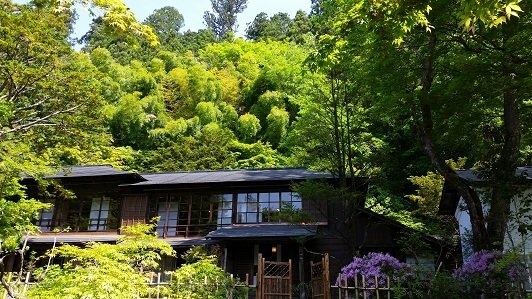
Located at the entrance to Lake Chuzenji in Nikko, Hotel Hana-an offers a serene retreat surrounded by breathtaking natural beauty. Lake Chuzenji, revered as a sacred place and beloved as a summer resort, transforms with the changing seasons. Designed with the concepts of "deep rest" and "quality time," our hotel provides a space where you can leisurely immerse yourself in the rich nature of Nikko. All rooms offer stunning seasonal views, while our cuisine features the freshest seasonal ingredients, and our hot springs boast different types of mineral-rich waters. Experience a truly relaxing stay that engages all your senses. In our rooms with private onsen, you can enjoy a relaxing soak in the comfort of your own space.   【About the Onsen】 Water color: 【Nikko Wanoshiro Onsen】 Clear 【Okunikko Yumoto Onsen】 Milky white Quality: 【Nikko Wanoshiro Onsen】 Simple alkaline spring 【Okunikko Yumoto Onsen】Sulfur spring Therapeutic effects: 【Nikko Wanoshiro Onsen】 Neuralgia, muscle pain, joint pain, health promotion, sprains, strains, chronic digestive diseases, etc. 【Okunikko Yumoto Onsen】 Low back pain, stiff shoulders, muscle pain, neuralgia, skin diseases, diabetes, gynecological diseases, hypertension, fatigue recovery, etc.

Nikko kaido Oshu kaido TOCHIGI
Snow Peak KANUMA Campfield & Spa

Snow Peak KANUMA Campfield & Spa

"Snow Peak KANUMA Campfield & Spa" is a camping ground consisting of 91 sites. It caters to various needs and camping styles, and offers rental of all necessary camping equipment, allowing you to enjoy camping without bringing your own gear. You can also enjoy open-air baths and sauna at the hot spring facility, as well as use the wooden deck and grassy area where you can eat meals purchased for takeout. Indulge in shopping at our store, where you can find locally sourced products and Snow Peak gear, and savor freshly-ground, hand-made soba noodles at "Kaminanma Soba Ryugai," a restaurant serving up delicious local ingredients.

Oshu kaido Nikko kaido TOCHIGI
Daigomado, Hall for the Goma Fire Ritual (Nikko-zan Rinno-ji Temple)

Daigomado, Hall for the Goma Fire Ritual (Nikko-zan Rinno-ji Temple)

This dedicated hall for prayer was constructed in 1998 to fulfill the wishes of many worshippers, making it the foremost Goma prayer hall in Nikko. In this esoteric Buddhist ritual, your prayers are conveyed to the Buddha through sacred fire. Goma prayers are performed daily and are open to all. They offer various benefits such as domestic tranquility, physical health, and prosperity in business. In the inner sanctuary of the Great Goma Hall, the principal image is the "Five Great Kings", surrounded by 30 statues of Buddhas and ancestral masters, including the "Seven Lucky Gods" and the "Twelve Heavenly Generals." Additionally, on the ceiling, you can find a magnificent painting of a "Great Ascending Dragon" that took two and a half years to complete. Why not make a wish and participate in this sacred ritual as a memorable part of your journey?

Nikko kaido Oshu kaido TOCHIGI
Footgolf Experience (Seven Hundred Club)

Footgolf Experience (Seven Hundred Club)

Combined golf and association football, the footgolf was established in 2009 by the Netherlands, and in 2012 the International Footgolf Federation was established and the first World Cup Footgolf Championship was held in Hungary.   Since then, many people have started to play footgolf, and the sport is now played in more than 40 countries centered in the United States and Europe. There are nearly 600 courses in the United States where footgolf can be played, and over 200 courses in the United Kingdom, making it very popular in western world.   The Japan Footgolf Association was established in 2014, and the Footgolf Club Championship was held on June 2nd and 9th at Seven Hundred Club in 2024.   You can experience not only footgolf at Seven Hundred Club, but also can enjoy the fields that was designed by Takahashi Yoichi, the cartoonist who created the manga "Captain Tsubasa".   Please check Seven Hundred Club's homepage here!

Nikko kaido Oshu kaido TOCHIGI
Seven Hundred Club

Seven Hundred Club

Seven Hundred Club has 18 holes with plenty of space in between on land as vast as 1 million square meters. There are artistic holes surrounded by forests, beautiful and thrilling holes with a pond, and so on to stimulate players’ competitiveness. The club stretches on land that is 1.5 times bigger than average golf courses, allowing players to improve their score or course management. The club also offers lesson programs matching player skill levels. The food options at the course are popular among both male and female plyers. The clubhouse has a BBQ area and also offers a wide variety of seasonal dishes. Visitors are sure to have a very fulfilling day here.

Nikko kaido Oshu kaido TOCHIGI
Kanuma Country Club

Kanuma Country Club

Opened in 1964, Kanuma Country Club (鹿沼カントリー俱楽部) is a golf club featuring a total of 45 holes, the highest number in Tochigi, on vast land surrounded by lush green trees. The highly strategic course layout features very thrilling and challenging greens. Kanuma Country Club (鹿沼カントリー倶楽部) is also recognized for its maintenance quality and is particularly proud of its greens maintenance.   Between rounds, enjoy exquisite yakiniku at the clubhouse yakiniku restaurant Kashoen (鹿翔苑). Or, at the main restaurant, you can try Kanuma Kalbi Ramen, which has been the restaurant’s best-selling dish for over 50 years.   During the summer, Rokumaru Terrace (ろくまるテラス) offers shaved ice made with Nikko natural spring water, which is popular in the local area.   With these features, you are sure to have a fulfilling day.

Nikko kaido Oshu kaido TOCHIGI
Nakamura Hachimangu Shrine Grand Festival

Nakamura Hachimangu Shrine Grand Festival

Hachimangu Shrine and the Samurai's Origin Nakamura Hachimangu Shrine is one of the eight shrines enshrining the god Hachiman in the Northern Kanto region. It is said that the Hachiman is is the guardian deity of the Minamoto clan warriors, so a legendary samurai called Minamoto no Yoshiie, the common ancestor of the shoguns of Minamoto no Yoritomo and Ashikaga Takauji, came here to pray for his victory.   After the establishment of the Kamakura Shogunate by Yoritomo, he attacked the Fujiwara clan of Oshu, which was then in northeastern Japan. Nakamura Munemura, the lord of the Nakamura County, fallowed Yoritomo's army, was rewarded to be the lord of the Date County of Oshu. Munemura has been seen as the ancestor of Date Masamune. The birth of Yabusame ceremony In 1736, Date Yoshimura, the 5th Daimyo of  Sendai Domain, just ended his "Sankin-kotai (alternate attendance)" and prepared to go back to his domin. Before he arrived in Sendai, Yoshimura came here and donated his horse to the god. In order to commemorate this event, the Yabusame Ceremony is held every year at the Annual Grand Festival.   Archers dress in samurai's hunting attire and ride on horseback, then shot at the target on the left on their horses. The whole ceremony is accompained by the thumping sound of taiko, which makes the ceremony very energetic.

Nikko kaido Oshu kaido TOCHIGI
Okabe Memorial Hall Kinrinso

Okabe Memorial Hall Kinrinso

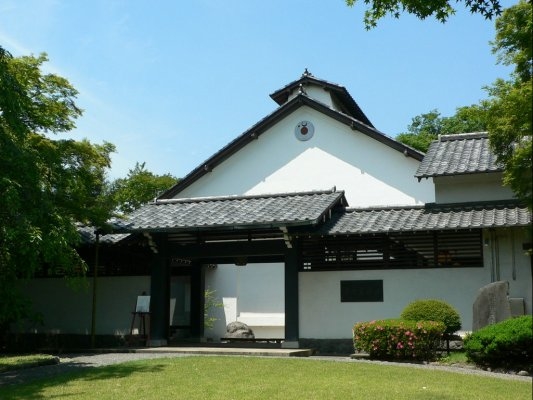
Okabe Memorial Museum "Kinrinso" has a circular Japanese garden and is surrounded by a stone wall made of local Isoyama stone (no longer produced).   The building was constructed in the middle of the Meiji period by Kyushiro Okabe, who collected building materials over a period of many years and trained carpenters and joiners in Tokyo for three years. The two-story wooden structure is a fireproof storehouse.   The interior is characterized by the use of ebony, ebony, and ironwood for all the alcove sections. Many of the paintings, calligraphies, and antiques in the interior are by authors closely associated with the region.   It was used as a villa of the Okabe family until 1952, as a venue for entertaining related parties and for displaying draperies. After that, it was used as a kappo restaurant "Kinrinso" until June 1988. In August of the same year, the city rented the building and decided to preserve it as the Okabe Memorial Museum "Kinrinso" in order to pass it on to future generations as a historical and cultural heritage of 100 years of Moka City's modern era.   It was designated as Tochigi Prefecture Tangible Cultural Property (building) on January 14, 2000, and together with the buildings of the Bussan Kaikan and Cotton Studio (now Cotton Hall), was donated to Moka City by the Okabe family in January 2001.  

Nikko kaido Oshu kaido TOCHIGI
Moka Summer Festival “Kojin Festival”

Moka Summer Festival “Kojin Festival”

The "Moka Summer Festival," the largest event in Moka City, will be held for three days on late July. More than 20 portable shrines and floats gather together at the festival square, where you can feel the enthusiasm of the festival goers.   On the first day of the festival, "Degyo-matsuri," or the "departure from the shrine," is held at Omae Shrine.Many festival-goers participate in the Degyo-matsuri to pray for the safety of the procession of portable shrines and stalls, a good harvest, the eradication of disease, and the development of industry. After the Degyo-Dashi, "Machiawase" is held, in which the portable shrines are carried across each town council, and the head mikoshi parades through the city.   On the second day, "Festival Plaza" will be held and the city center will become a pedestrian zone. approximately 20,000 fireworks will color the night sky, and "Mikoshi Kawatogo (carried mikoshi to cross the river)" would be held on Gogyo River.

Oshu kaido Nikko kaido TOCHIGI
Rinnoji Temple’s Gohan-shiki (rice-forcing) Festival

Rinnoji Temple’s Gohan-shiki (rice-forcing) Festival

A Dramatic Ceremony Draws Laughter and Gasps The Gohan-shiki is a unique ceremony that has been handed down only in Nikko area. Nikko was opened as a sacred mountain for the syncretization of Shintoism and Buddhism, and mountain asceticism by mountain ascetics flourished, with the ascetics bringing back offerings made to the main deity in the mountain and sharing them with people in the village.   The entire ceremony consists of approximately three parts: the "Santen Gogyo Ku" and "Saito Daima Gomaku," the "Gohan Gonyo Ceremony," and the "Garamaki".   After the "Santen Gogyo Ku" and "Saito Daima Gomaku,"the hall becomes bright, the recipients line up on the platform, and the "ceremony of receiving rice with strength" begins. The ceremony proceeds in the following order: "Gojinshu (sacred wine)," "Prayer," "Gohan (rice)," "Naseen (rice dishes)," "Kinko (food)," and "Koyo (offering). One of the most spectacular parts of the ceremony is when a monk dressed in a mountain priest costume presents three heaping piles of rice to a kamishimo-dressed recipient, who is told to "eat 75 bowls of rice without leaving any leftovers". The comical sight of the recipient being forced to eat the rice and having it placed on his head is sure to draw laughter from the audience.   After successfully completing this ceremony, the recipients will conclude the ceremony by sowing the blessings they have received in the ceremony to the general public, in accordance with the Buddhist teaching of "not keeping the blessings for oneself but sharing them with others.   In the Edo period, only feudal lords of 100,000 koku or more could serve as a recipient, and the Tokugawa shoguns and other famous feudal lords from all over the country were named as recipient as an "honor for my clan".

Nikko kaido Oshu kaido TOCHIGI
Setsubun Armor Year-cross in Ashikaga

Setsubun Armor Year-cross in Ashikaga

What is Setsubun Armor Year-cross? Every year’s February 3 is “Setsubun” festival in Japan, symbolling the end of the winter. On this day, Ashikaga City holds “Armor Year-cross” event, over 200 people would dress as samurai to join the event. The parade walk to Bannaji Temple from Orihime Community Center. People celebrate their victory when they arrived at Bannaji Temple, and pray for city’s prosperity. History of Setsubun Armor Year-cross Back to the Kamakura period about 750 years ago, a powerful samurai called Ashikaga Yasuuji led 500 samurai to assemble at Bannaji Temple, the residence of Ashikaga Family, in order to honor their family. 120 years later, his descendant, Ashikaga Takauji, became the Shougun of Japan and created the Muromachi period. This event was closed in the late Edo and Meiji eras, but in 1915 (Taisho 4) it was restarted by a group of fiber workers. Ashikaga City has samurai armor and kimonos for visitors to try on.

Nikko kaido Oshu kaido TOCHIGI
The Great Wisteria Festival of Ashikaga Flower Park

The Great Wisteria Festival of Ashikaga Flower Park

Ashikaga Flower Park was the only spot in Japan that had been selected as “top 10 world Dream destinations” by CNN. The garden holds “The Great Wisteria Festival” from late April to mid-May every year. You can see the Great wisteria over 160 years old which spreads over a 600-tatami trellis area, as well as the 80m-long white wisteria tunnel, the Laburnum tunnel and more than 350 other wisteria trees in full bloom. Various colors of wisteria bloom in order, from pale pink, purple, white, to yellow, which allows you to enjoy all of the wisteria for about one full month. You also can enjoy wisteria in night because the garden would be lighted up during the festival. In 2018, the JR Railway opened JR Ashikaga Flower Park Station, which make visitors to come here easily.

Nikko kaido Oshu kaido TOCHIGI
Mashiko Yuwakan     Gozasho (imperial chamber) and Peace Gallery

Mashiko Yuwakan Gozasho (imperial chamber) and Peace Gallery

Mashiko Yuwakan was originally established in Meiji 15 (1882) in Nikko City, Tochigi Prefecture as the Nanma Hotel. His Majesty the Emperor Emeritus stayed there during the war as evacuating school children when he was Crown Prince . The Gozasho, where he heard the Imperial Rescript on the Termination of the War over the The Jewel Voice Broadcast at the end of the war, remains to this day. The Mashiko-ware pottery kiln in Mashiko was relocated to its current location in Showa 48 (1973), and was donated to the town in Heisei 28 (2016). The building was renovated and re-opened as Mashiko Yuwakan with the hope to pass on the value of this building not only as a town treasure, but also as a national treasure to future generations. Currently, the Peace Gallery is exhibiting newspapers from the end of the war and panels showing the relationship between Tochigi Prefecture and the Imperial Family. In the Gozasho, which retains the appearance of those days, the full audio of the The Jewel Voice Broadcast is available to be listened. ※Masaiko Yuwakan has been renovated while keeping the original charm of the time it was built, so there are steep stairs and steps. Please be aware that the facilities are not barrier-free. We thank you for your understanding.

Nikko kaido Oshu kaido TOCHIGI
Auto Camp Nakagawa Station

Auto Camp Nakagawa Station

Auto-Camp Nakagawa Station is a drive-up camp ground where you can see the blue waters of the Naka River, the Kanto region's greatest, flowing right before your eyes. It's a great location to watch the river's flow reverse and is also an optimal base camp for mountain biking, hiking and river recreation such as canoeing and kayaking.There canoe and kayak rides and rentals, as well as a school where you can challenge yourself at a pace that suits you. In addition to camping in tents, campers can also stay in air-conditioned bungalows and lodges with AC power (outlets are for charging cell phones only) or in teepee tents (Native American tents) equipped with sunken fireplaces."

Nikko kaido Oshu kaido TOCHIGI
Akanuma Nature Information Center

Akanuma Nature Information Center

This information center is located in Akanuma, the entrance to Senjogahara. It provides information on the nature, hiking trails, and other aspects of parts of the Okunikko area such as Senjogahara and Odashirogahara. It serves as the low emission bus shelter as well as the departure point for Odaisirogahara, Sainoko, and Senjugahama. The information center also features informational exhibits on the origins of Senjogahara, its seasonal flowers, and other topics. The center also conducts nature tours and other activities during the high season.

Nikko kaido Oshu kaido TOCHIGI
Deai no Mori Strawberry Farm

Deai no Mori Strawberry Farm

This strawberry farm is operated by a company created through a collaboration between Kanuma City and JA. At the farm, you can enjoy picking Tochigi's representative strawberry varieties, Tochiotome and Tochi-Aika. Reservations are required for strawberry picking, and you can eat as much as you want for 45 minutes. The greenhouses are barrier-free and equipped with toilets, so anyone can pick strawberries in safety. The shop also sells Tochihime, a strawberry that has been dubbed a phantom variety because of its soft flesh and rare availability, as well as the luxury variety Skyberry.

Nikko kaido Oshu kaido TOCHIGI