

Ninomiya Sontoku no Yukari Pine Avenue
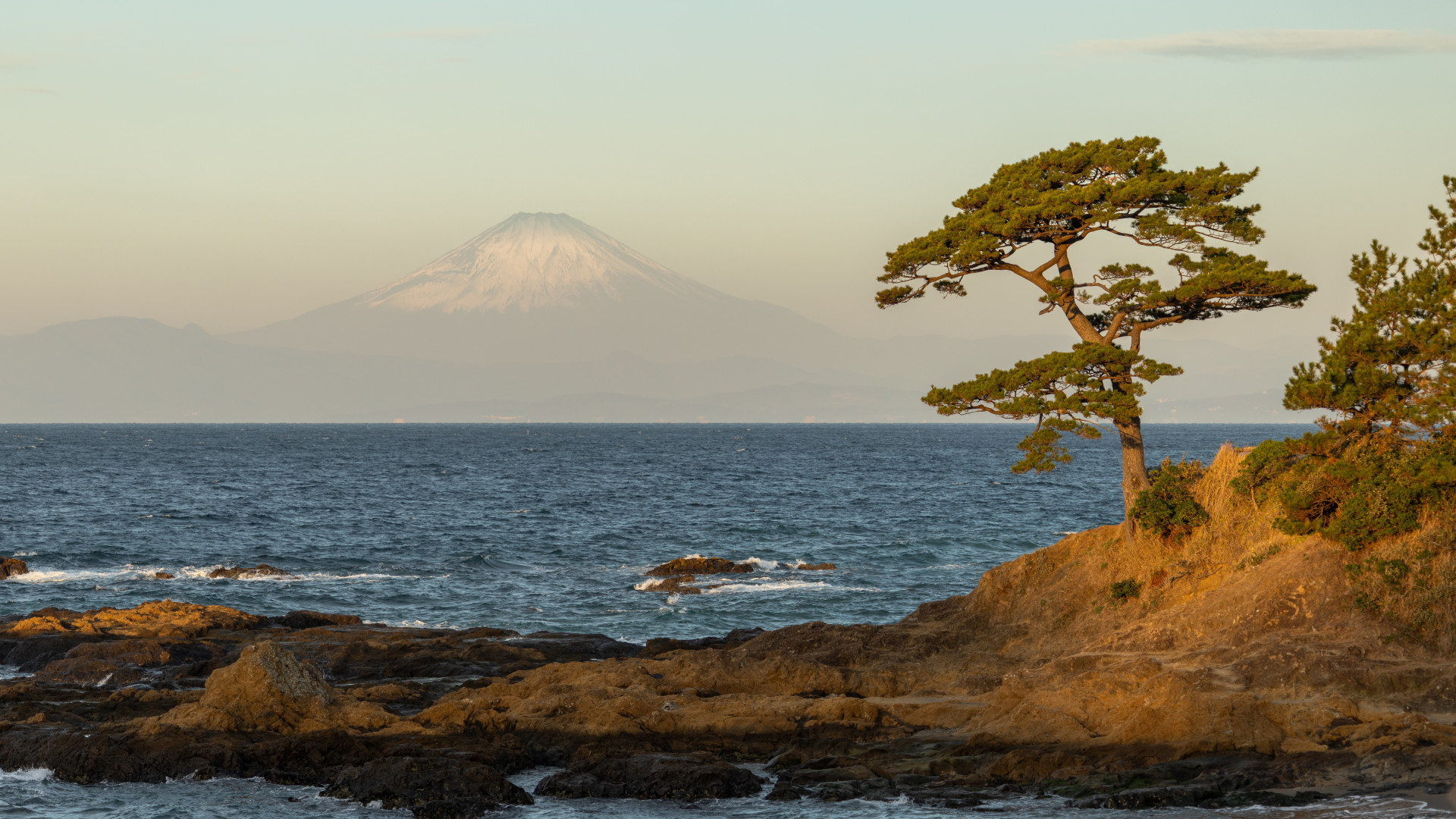
It is said that the 400 black pines by the levee up to the estuary were planted by Ninomiya Sontoku, an agricultural leader of the Edo era, with money he received as rewards from his nursemaid.
Total: 1715 items
It is said that the 400 black pines by the levee up to the estuary were planted by Ninomiya Sontoku, an agricultural leader of the Edo era, with money he received as rewards from his nursemaid.
A poetic symbol in the uraga inlet. It’s a ferry boat connecting two points in the town apart with inlet. It's an unusual municipal road (Route2073) with a long history since Edo period
Maichin is located in the west exit of Yokohama Station where there is still a Showa atmosphere left. Established 60 years ago, Maichin is a restaurant specializing in pork where you can enjoy rare pork.
The Odakyu Hotel de Yama, located on the shores of Lake Ashi in Hakone, is an authentic resort hotel in an unbeatable location, with Lake Ashi sparkling before your eyes and a magnificent view of Mount Fuji opposite the garden. Built on the site of the former villa of Baron Koyata Iwasaki, the hotel still retains strong traces of its former days and exudes a romantically classic atmosphere. The large garden boasts a vast area that was inherited from the former Iwasaki Residence, designed to make the most of the natural characteristics of the hillside so that the flowers and trees of the four seasons grow in harmony with the majestic form of Mt. Fuji, as well as the deep blue waters of Lake Ashi. Colorful azaleas and rhododendrons begin to bloom in May in the vast garden, creating a spectacular view against Mt. Fuji and Lake Ashi in the background. In 2022, the garden's azaleas were recognized as "National Collection No. 10" by the Japan Association of Botanical Gardens, and in 2023, the rhododendrons were recognized as "National Collection No. 15". 230 hydrangeas of 25 varieties bloom from mid to late June. The Rose Garden is at its best twice a year, in June and October, which fills the garden with a sweet fragrance of rose. We hope you enjoy this garden filled with flowers from season to season to your fullest desire!
This Spanish-style (western style) building is located at the southern end of Harbor View Park (Minato-no-Mieru Oka Koen), from where you can see the harbor. The coffee room on the first floor is an open space where you can overlook the rose garden. The rose flavor tea is a popular souvenir.
This is a fire festival held during Little New Year (around January 14) that has continued since the Edo period. In summer, nine sites are set up on the beach, which is crowded with bathers, and fire is lit to pray for good health and family safety. The festival is designated as an Intangible Folk Cultural Property of Japan and attracts many people every year. It is said that if you eat dumplings cooked over the fire you will not catch a cold, and if you write your name on a piece of paper that you burned and it flies up high it will make your arms grow longer, and if you take a pine cinder and put it on your roof it will be a charm to ward off fire.
A compact city hotel directly connected to the east exit of Odawara Station, located in the Minaka Odawara complex. Natural hot spring water is sourced from Hakone-Yumoto. This hotel offers great convenience as a base for sightseeing in Hakone and Atami.
A path to life that connects local life with travelers.Hotel Enmichi is located on the site of what was once the approach to Inage Shrine, the main shrine, from Kawasaki-juku, the second post town on the Tokaido Road's 53 Stations, during the Edo period. It is believed to have been a place where travelers and pilgrims came and went, fostering various "connections." Here, we cherish the history of Kawasaki-juku, and believe in modern times, too, that the daily life of the local area is a tourism resource to be proud of. To this end, we aim to be an inn where various new "connections" are born of intersections between our community and the daily lives of travelers.Endo Restaurant Business Hours: Breakfast: Tuesday-Sunday, 7am–9am (closes once sold out) Lunch: Weekdays, 11:30am–2:30pm (Last order at 1:30pm); Weekends and holidays, 11:30am–3pm (Last order at 2pm) Dinner: Tuesday-Saturday, 5pm–9:30pm (Last order at 9pm) *Closed for dinner on Sundays and Mondays *Subject to change without notice on the day of operation.
Kashi-no-Mori Park is an oasis for both children and adults throughout the year and is easily accessible by car. A wide range of events are held in the park in early April when visitors come for the “Sakura Festival” in spring. The park is also popular for a fantastic night time viewing of illuminated cherry blossoms. The streets around Kashi-no-Mori Park are lined with cherry blossom trees (north-south 2.3km, east-west 1.3km). Be sure to walk through the stunning cherry blossom tunnelled street with approximately 650 Yoshino cherry trees!
The Somei Noh Stage, the oldest Noh stage in the Kanto region, was built in 1873 by the Maeda family, the former lord of the Kaga Domain, and opened in 1996. Various events are held with explanations to help beginners understand and unique planned performances and workshops, earning the stage the slogan “a Noh theater with a low threshold.” Once a month, we hold tours (advance reservation required) where the staff guides visitors through exhibits related to the history of the Nohgaku and the Noh stage, as well as private dressing rooms not normally accessible to the public. ※ Closed from January 2024 to June 2026 due to renovation work.
This shrine was close to the Gongoro family, who had ruled Kamakura for three years. Every year on September 18th, the shrine holds a famous procession with masks that are preserved shrine treasures.
The park is located on an island called Nojima at the entrance to Hirakata Bay in the southernmost part of Yokohama City. The area is famous for "Nojima no Sekisho" (a brocade picture depicting a sunset over the fishing village of Nojima)—part of the "Kanazawa Hakkei" (Eight Famous Views of Kanazawa) collection painted by Hiroshige Utagawa, an ukiyoe artist active in the late Edo period. Centered on Mount Nojima, 57m above sea level, the park features a number of facilities such as an observatory, barbecue area, campground, and baseball field, and from the observatory, you can see the sea of Yokohama, Boso Peninsula, and Mount Fuji. Other historical spots include the former Kanazawa residence of Ito Hirobumi, a Yokohama City-designated Tangible Cultural Property, and the Nojima Shell Mound.
On entering this guesthouse situated on a small hill, you will enter a sophisticated resort space. Including a relaxing lounge where the sound of water will soothe you, and a sky walk that affords outstanding views, this is a special place that provides healing and relaxation.
Each of the eight western style buildings will decide on a country theme and introduce their country of choices' Christmas decorations and culture. During the event, Yamate 234 will feature holiday lights and Yamate Italia-Yama Garden will host a candlelight garden. Other Christmas-related events (some with fees) will be held at each building.
It is a park that both children and adults can enjoy and learn about nature. You can see organisms of the four seasons and also experience agricultural activities such as rice planting and harvesting. At the park there is a "Forest Slide" that is 106 meters long, the longest in Japan.
This is the largest wintersweet (robai) garden in Japan. You can enjoy the pretty flowers and sweet scent of about 3000 plants with about 20,000 branches of wintersweet (robai), even in the cold of early spring.
Visitors can enjoy drinks served in Kamakurabori lacquerware at a cafe and experience how it feels to use real lacquerware in daily life. The shop offers a variety of Kamakurabori that you may want to use in your daily life as well as items that go well with lacquerware. In the gallery, the various works of Kamakurabori artists along with other artists are displayed.