
Greater Tokyo

See & Do

reset
Meiji-No-Yakata

Meiji-No-Yakata

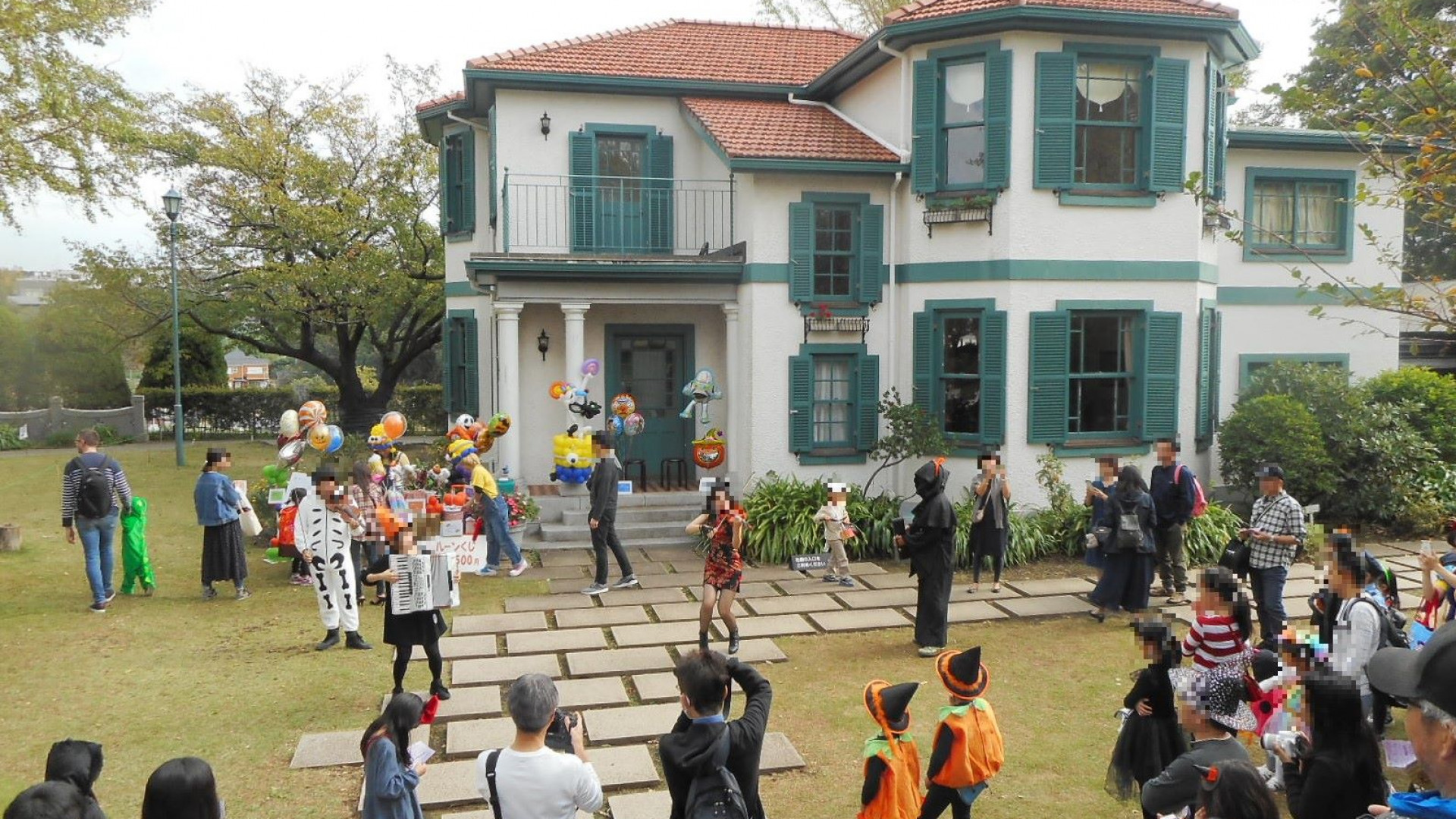
Meiji-No-Yakata is a restaurant remodeled from a villa built by an American merchant during the Meiji period (1868-1912). Japan at that time was just beginning to be introduced to Western culture. At the restaurant, you will see the fusion of Japanese and Western culture. The stone wall technique, used in construction of Japanese castles, was used to build the villa, and its interior was adorned with Western decor. Today, these features make the restaurant building very tasteful. Signature dishes are hamburger steak, omelet and rice (“omurice”), and hashed beef and rice (“hayashi rice”), which are all popular home-cooked dishes in Japan. The chef turns these dishes into masterpieces that you can experience only at Meiji-No-Yakata. Other strongly recommended dishes are multi-course meals featuring choice “Tochigi” steak using locally produced Tochigi Wagyu. Enjoy a relaxing dining experience in a classic atmosphere at Meiji-No-Yakata, a building selected as a cultural property, that transcends time and space.

Nikko kaido Oshu kaido TOCHIGI
Nasu Bettei KAI

Nasu Bettei KAI

Nasu Bettei KAI is a ten-guest-room hot spring inn on 6,600m2 of land surrounded by lush green forests. It is right near the Nasu Imperial Villa and stands at the foot of the Nasu Mountain Range in Nikko National Park. The interior, furnished using traditional Japanese materials, is functional and matches the modern lifestyle to provide comfort to guests. All guest rooms come with a tub filled with natural hot spring water from the local historic spring source, Omaru Hot Spring. Guests are invited to enjoy the bath anytime while feeling the season of Nasu. For dinner, you will be served a satoyama kaiseki multi-course meal, cooked to perfection to bring out the taste of ingredients such as Tochigi Wagyu raised on the land of Nasu, ayu fish harvested from the clear Naka River, and fresh farm products. Nasu Bettei KAI is a very special inn that maintains connections with the local history, culture, and personality. 【About the hot spring】 Water color: clear Spring water type: simple spring water Efficacy: beautifies skin, alleviates nerve pain, sensitivity to cold, sore muscles, fatigue, and so on

Oshu kaido Nikko kaido TOCHIGI
กริลล์แอนด์สเต็ก เมียวเง็ตสึโบ (Grill&Steak Myogetsubo)

กริลล์แอนด์สเต็ก เมียวเง็ตสึโบ (Grill&Steak Myogetsubo)

เมียวเก็ตสึโบ (Myogetsubo) เป็นร้านอาหารที่เชี่ยวชาญด้านสเต็กและปิ้งย่าง ตั้งอยู่ในอาคารที่ได้รับการปรับปรุงใหม่จากที่พักเดิมของวัดนิกโกซังรินโนจิ ซึ่งมีประวัติศาสตร์ยาวนานกว่า 1,250 ปี สิ่งที่ไม่ควรพลาดของที่นี่คือสเต็ก “โทชิงิวากิว” เนื้อวากิวคุณภาพสูงจากญี่ปุ่น โทชิงิวากิวเป็นเนื้อวัวขนดำที่มีเกรด A4 ขึ้นไป โดยวัวจะถูกเลี้ยงในสภาพแวดล้อมธรรมชาติที่สมบูรณ์แบบของจังหวัดโทชิงิ ทำให้เนื้อวัวสายพันธุ์นี้ได้รับรางวัลคุณภาพยอดเยี่ยมระดับประเทศ 2 ปีซ้อน ลองลิ้มรสเนื้อโทชิงิวากิวในบรรยากาศที่ล้อมรอบไปด้วยมรดกโลก พร้อมสัมผัสความสง่างามของอดีตในช่วงเวลาที่หรูหราและเงียบสงบ

Nikko kaido Oshu kaido TOCHIGI
Royal Meadow Golf Club

Royal Meadow Golf Club

Royal Meadow Golf Club is a very strategic course with beautiful views designed under supervision of the professional golfer, Ryo Ishikawa. The Royal Meadow Cup for 2024 JLPGA STEP UP TOUR took place here. Following the basic golf course design, you can see where your first shot goes from the tee, and you can see the green from where you make your second shot. It is a highly strategic course having multiple tees to match each player’s skill level. At the same time, the course is designed to be flat with each hole's elevation being 10 meters or less. You will be challenged by tricky water hazards and sand bunkers. Royal Meadow Golf Club has accommodations that are very popular among visitors from far. Please stay the night before playing and wake up to a relaxing morning.

Nikko kaido Oshu kaido TOCHIGI
Okabe Memorial Hall Kinrinso

Okabe Memorial Hall Kinrinso

Okabe Memorial Museum "Kinrinso" has a circular Japanese garden and is surrounded by a stone wall made of local Isoyama stone (no longer produced).   The building was constructed in the middle of the Meiji period by Kyushiro Okabe, who collected building materials over a period of many years and trained carpenters and joiners in Tokyo for three years. The two-story wooden structure is a fireproof storehouse.   The interior is characterized by the use of ebony, ebony, and ironwood for all the alcove sections. Many of the paintings, calligraphies, and antiques in the interior are by authors closely associated with the region.   It was used as a villa of the Okabe family until 1952, as a venue for entertaining related parties and for displaying draperies. After that, it was used as a kappo restaurant "Kinrinso" until June 1988. In August of the same year, the city rented the building and decided to preserve it as the Okabe Memorial Museum "Kinrinso" in order to pass it on to future generations as a historical and cultural heritage of 100 years of Moka City's modern era.   It was designated as Tochigi Prefecture Tangible Cultural Property (building) on January 14, 2000, and together with the buildings of the Bussan Kaikan and Cotton Studio (now Cotton Hall), was donated to Moka City by the Okabe family in January 2001.  

Nikko kaido Oshu kaido TOCHIGI
Moka Summer Festival “Kojin Festival”

Moka Summer Festival “Kojin Festival”

The "Moka Summer Festival," the largest event in Moka City, will be held for three days on late July. More than 20 portable shrines and floats gather together at the festival square, where you can feel the enthusiasm of the festival goers.   On the first day of the festival, "Degyo-matsuri," or the "departure from the shrine," is held at Omae Shrine.Many festival-goers participate in the Degyo-matsuri to pray for the safety of the procession of portable shrines and stalls, a good harvest, the eradication of disease, and the development of industry. After the Degyo-Dashi, "Machiawase" is held, in which the portable shrines are carried across each town council, and the head mikoshi parades through the city.   On the second day, "Festival Plaza" will be held and the city center will become a pedestrian zone. approximately 20,000 fireworks will color the night sky, and "Mikoshi Kawatogo (carried mikoshi to cross the river)" would be held on Gogyo River.

Nikko kaido Oshu kaido TOCHIGI
Musha Festival

Musha Festival

On January 4 each year, the Musha Festival, an annual Shinto ritual in which arrows are shot toward Mount Akagi, is held at Futarasan Shrine's Chugu Shrine on the shore of Lake Chuzenji. It is based on a legend of Gods warfare, and is a tradition that has continued since the Muromachi period.   In the legend of the Gods battle, the deity of Mount Nantai in Nikko changed himself into a "giant snake," and the deity of Mount Akagi in Gunma changed into a "giant centipede" and fought over at Senjogahara. It is said that the deity of Mount Nantai won the warfare.   In accordance with the legend, the Guji (head of priests) stands on the Kamishimbashi and releases the first arrow, with a shout of "Ya" as a cold wind blows, followed by the priests and archers dressed in kariginu, who shoot arrows one after another in the direction of Mount Akagi in this heroic ritual.

Nikko kaido Oshu kaido TOCHIGI
Nasu Yuzen Shrine

Nasu Yuzen Shrine

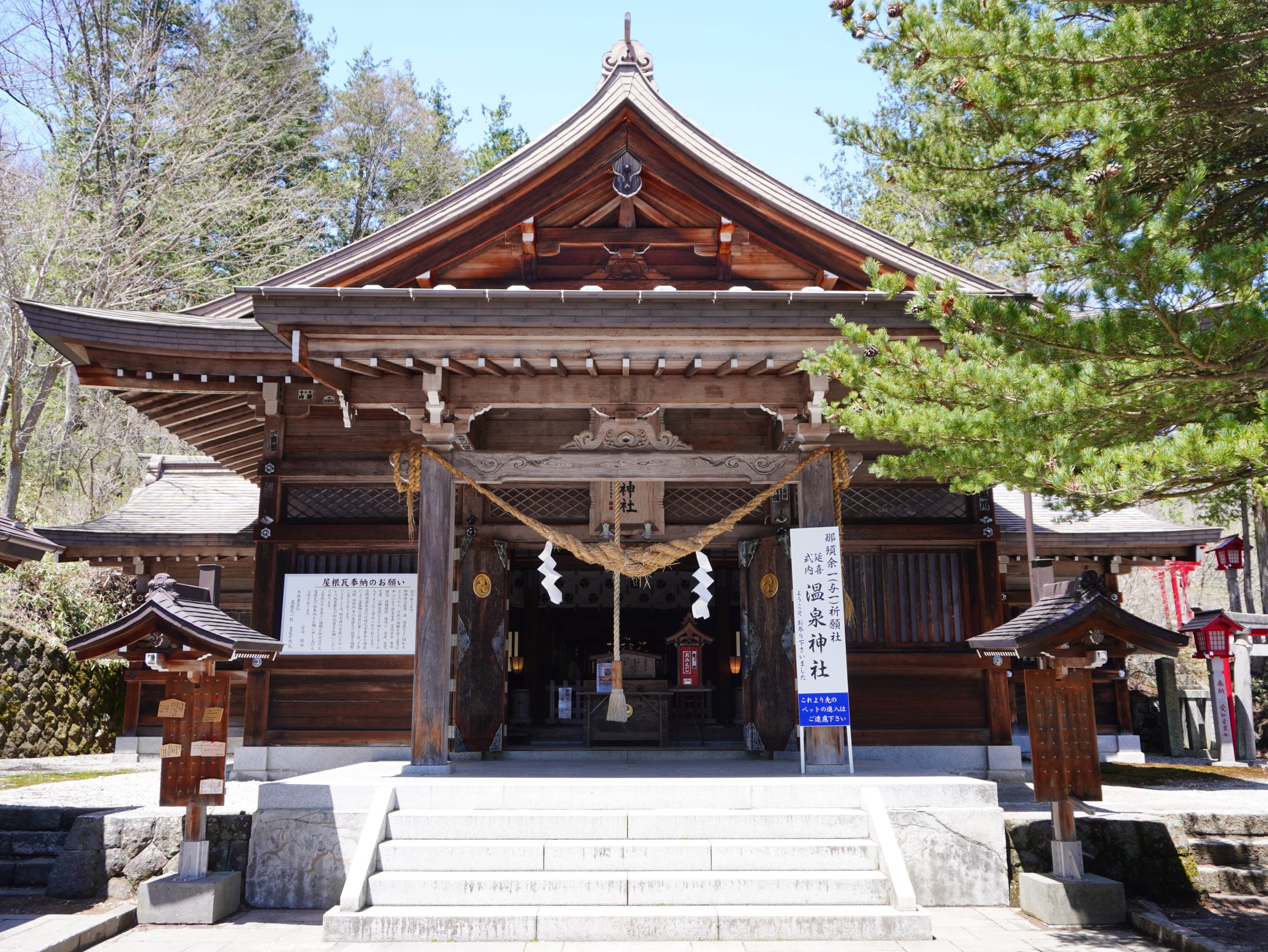
History of Nasu Yuzen Shrine It is said that a hunter named Kano found onsen here when he was trying to hunt a white deer. He built this shrine for thanksgiving. According to an article written in Nara period (A.D 710~794), we can confirm that the shrine already existed during that time.   During the Genpei War in 12th century, an archer called Nasu Yoichi came here to pray for victory over Taira family’s army. He shot down a fan by one arrow that enemy put on the front of their boat when he stood on the ground. It made him became legend and the shrine became very famous for blessing Yoichi. Yoichi donated his bow and arrow to the shrine, which became shrine’s tressure later.   Shrine’s famous festival The most important event of the shrine is the “Dai Festival”, which is held on October 8 and 9 every year. They dedicate onsen to the God, and perform a traditional dance called “Urayasu Dance”.   Then on October 9, people perform another traditional dance called “Ozawa’s Lion Dance,” which is designated as the “Intangible Cultural Property of Nasu Machi” to pray for prosperity.   There is also a famous festival be held on the last weekend of May, the “Nasu Seshosseki Gojinka Festival”. The highlight of the festival is a parade from Yuzen Shrine to Sesshoseki by participants attired in white clothing with torches.

Nikko kaido Oshu kaido TOCHIGI
The Great Wisteria Festival of Ashikaga Flower Park

The Great Wisteria Festival of Ashikaga Flower Park

Ashikaga Flower Park was the only spot in Japan that had been selected as “top 10 world Dream destinations” by CNN. The garden holds “The Great Wisteria Festival” from late April to mid-May every year. You can see the Great wisteria over 160 years old which spreads over a 600-tatami trellis area, as well as the 80m-long white wisteria tunnel, the Laburnum tunnel and more than 350 other wisteria trees in full bloom. Various colors of wisteria bloom in order, from pale pink, purple, white, to yellow, which allows you to enjoy all of the wisteria for about one full month. You also can enjoy wisteria in night because the garden would be lighted up during the festival. In 2018, the JR Railway opened JR Ashikaga Flower Park Station, which make visitors to come here easily.

Oshu kaido Nikko kaido TOCHIGI
THE RITZ-CARLTON, NIKKO

THE RITZ-CARLTON, NIKKO

The Ritz-Carlton, Nikko, the luxury hotel in Nikko National Park, is the first Ritz-Carlton where guests can enjoy a hot spring. Baths source hot spring water from the historic Nikko Yumoto Onsen. Its soft, milky warm water makes you feel the blessing of the nature of Okunikko. Each suite features a private balcony from which you can enjoy the view of scenic Lake Chuzenji and majestic Mount Nantai, both of which are the symbols of Nikko National Park. You will be sure to lose track of time in these spacious guest rooms, which come with a traditional engawa porch and the décor that blends minimalist and traditional Japanese styles together. For dinner, you can have a traditional multi-course kaiseki meal prepared with fresh ingredients produced in Tochigi Prefecture for you to explore the intricate world of Japanese cuisine. The hotel, being amid the grand nature of Nikko, also offers activity programs including hiking and skiing. 【About the hot spring】 Water color: milky white Spring water type: hydrogen sulfide-type simple sulfur spring water Efficacy: alleviates nerve pain, joint pain, and fatigue, and boosts skin metabolism by removing substances causing atopy Note: people wearing a fashion tattoo are permitted

Nikko kaido Oshu kaido TOCHIGI
Shibazakura Festival

Shibazakura Festival

The Shibazakura Festival is held every year at Ichikai Town Shibazakura Park in April and May.   About 280,000 plants in magenta, pink, purple and white are planted over 18,000 square meters in Shibazakura park. The flower carpet is patterned after the Kokaigawa river, which starts near the town.   During the festival, a soba restaurant(Hana) in the park, you can enjoy authentic hand-made soba. Additionally, also sells agricultural products and shibazakura seedlings.

Nikko kaido Oshu kaido TOCHIGI
Komadome Falls

Komadome Falls

Considered Nasu's foremost waterfall, Komadome Falls is three meters wide and falls approximately twenty meters from a cliff on the Yosasa River. Once, it was a waterfall that can only be seen after the leaves have fallen, but along with the establishment of Nasu Heisei no Mori Forest in 2011, as well as a falls observatory, it became possible to catch a glimpse of Komagome Falls throught the seasons (closed during winter). The observation deck allows you to see a full view of the waterfall from above, which is surrounded by emerald green trees in the early summer and a rainbow of colorful leaves in the fall. Around the end of October, when the autumn leaves are at their peak, the contrast of red and yellow in the valleys together with the clear blue of the waterfalls is a spectacular sight for visitors."

Nikko kaido Oshu kaido TOCHIGI
Saimyoji Temple

Saimyoji Temple

This Shingon Buddhist Sect Buzan School Temple in Mashiko City, Tochigi Prefecture is dedicated to the 11-headed Kanzeon Bodhisattva.  Saimyoji temple is the twentieth temple in the Bando (33 Kannon temples of kanto region) pilgrimage circuit. The gabled thatched two-story gate and three-story pagoda constructed in 1492 and the miniature shine in the main temple hall that is said to be created during the Muromachi period have all been designated Important Cultural Properties of Japan. A statue of a laughing Yama (king of Hell) next to the Bodhisattva Jizo who protects those who have fallen to hell is also found here at the temple. The laughing Yama (king of Hell) is said to be the incarnation of the jizo."

Nikko kaido Oshu kaido TOCHIGI
Tochigi Flower Center

Tochigi Flower Center

The Tochigi Flower Center is located at the base of Mt. Mikamosan Park. Come enjoy a variety of flowers in a large flower bed shaped like six flower petals as well as the largest greenhouse in the country. The center plans a variety of exhibitions based on the season and also offers horticultural advice. Their permanent exhibits include flowers, fruits, and plants of the tropics and subtropics as well as strange, bizarre, and rare plants from around the world such as welwitschia mirabilis. Events are held showing off seasonal flowers."

Nikko kaido Oshu kaido TOCHIGI